

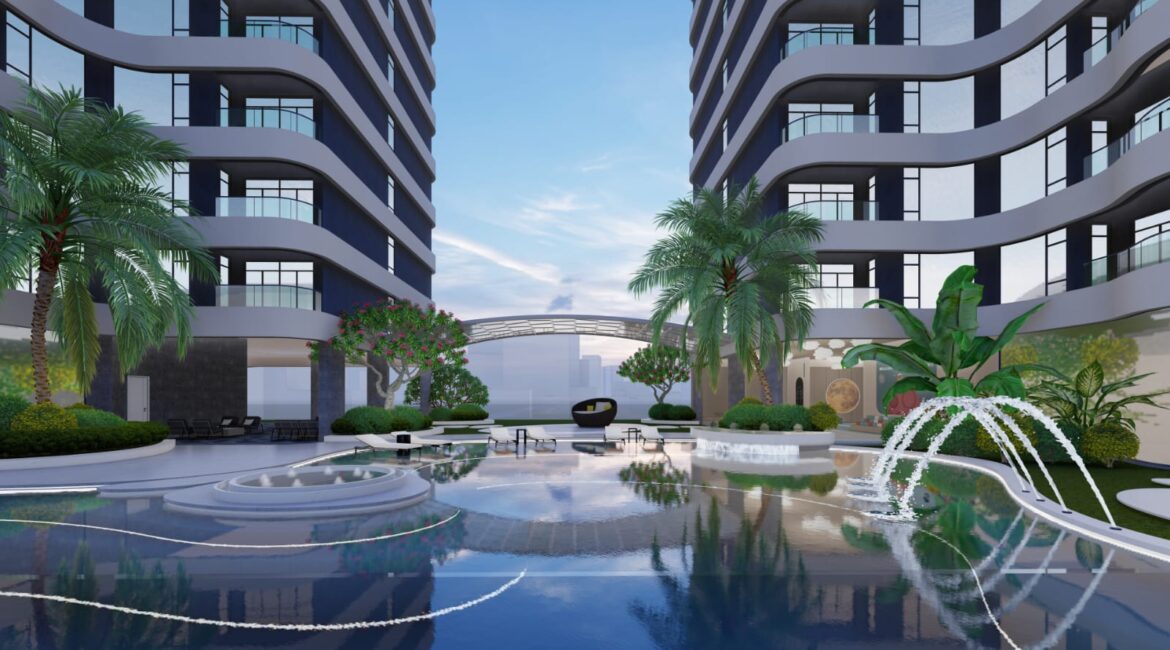
Kilimani is arguably the most densely rented neighbourhood in Nairobi. It has more apartment buildings per square kilometre than anywhere else in the city, more active rental listings at any given time, and the most diverse range of price points within a single neighbourhood boundary. You can rent a basic one-bedroom apartment in Kilimani for KES 55,000 per month or a large three-bedroom penthouse for KES 250,000. Both are genuinely in Kilimani.
That diversity makes Kilimani one of the most searched and most misunderstood rental markets in the city. Tenants who search “Kilimani apartments” and see listings ranging from KES 35,000 to KES 180,000 for what are described as similar unit types are not being misled: they are seeing the real width of a neighbourhood that spans everything from 1980s walk-up blocks to 2024-completed luxury high-rises within a few hundred metres of each other.
This guide explains what drives those price differences, what each budget level actually gets you in Kilimani in 2026, and whether Kilimani is the right neighbourhood for your specific situation and budget.
Where Is Kilimani and Why Do People Rent There?
Kilimani sits approximately three kilometres south of Nairobi’s Central Business District, bounded roughly by Ngong Road to the south, Argwings Kodhek Road to the east, Lenana Road to the west, and the Dennis Pritt Road and Milimani area to the north. Its immediate neighbours are Kileleshwa to the northwest, Upper Hill (Nairobi’s financial district) to the northeast, and Lavington to the southwest.
The reasons Kilimani consistently attracts Nairobi’s professional tenant market are well established and unlikely to change soon.
Central location with good connectivity. Kilimani is one of the most centrally located residential neighbourhoods in Nairobi. Upper Hill, where many of Nairobi’s banks, international organisations, and professional firms have offices, is immediately adjacent. The CBD is a short drive or manageable walk. Westlands, Upperhill, and the industrial area along Enterprise Road are all accessible in reasonable traffic. For professionals whose work takes them across different parts of the city on any given day, Kilimani’s central position minimises the daily commute burden.
Volume and variety of housing stock. Kilimani has more apartments per square kilometre than anywhere in Nairobi. The sheer volume of supply means vacancies occur regularly and tenants have genuine choice at most price points. For a tenant moving to Nairobi from elsewhere or relocating within the city, Kilimani is the neighbourhood most likely to have something available quickly at a range of price points.
Amenities. Kilimani has a strong concentration of supermarkets (Naivas, Carrefour, and Quickmart branches within or immediately adjacent to the neighbourhood), pharmacies, gyms, restaurants, and medical facilities. It is a functionally self-contained neighbourhood for day-to-day needs in a way that more peripheral areas of the city are not.
Proximity to Nairobi’s key social infrastructure. The area around Kilimani, Hurlingham, and the Argwings Kodhek Road corridor has a concentration of international schools, private hospitals (Aga Khan, Nairobi Hospital, MP Shah), and sports clubs that makes it the default choice for families with school-age children who want a central Nairobi base.
Rent Prices in Kilimani by Property Type (2026)
These ranges reflect typical asking rents for properties actively listed in Kilimani in 2026. As with all Nairobi neighbourhoods, individual properties vary based on age, management quality, amenities, specific location within the neighbourhood, and the condition of the unit. Browse current live listings on The Realtors Platform’s apartments for rent in Nairobi to verify current pricing for specific properties.
Bedsitters and Studio Apartments
Bedsitters and compact studio apartments in Kilimani exist primarily in the neighbourhood’s older residential blocks, many of which were originally built as single rooms or converted from larger units.
- Basic bedsitter in older block: KES 18,000 to 28,000 per month
- Studio apartment in a managed mid-range development: KES 58,000 to 62,000 per month
- Compact studio in a newer, better-finished building: KES 68,000 to 75,000 per month
One-Bedroom Apartments
One-bedroom apartments are the most actively traded unit type in Kilimani’s rental market. The range is broader here than in almost any other Nairobi neighbourhood, reflecting the coexistence of old and new stock within the same postcode.
- Older block, basic finishes, minimal shared amenities: KES 58,000 to 62,000 per month
- Mid-range managed development, good finishes, standard amenities (security, caretaker, generator for common areas): KES 42,000 to 65,000 per month
- Premium development, high-spec finishes, full amenity package (pool, gym, full backup power, covered parking): KES 65,000 to 95,000 per month
- Luxury new development, top-of-market finishes, concierge, rooftop: KES 90,000 to 140,000 per month
Two-Bedroom Apartments
Two-bedroom units in Kilimani represent the sweet spot of the neighbourhood’s rental market: strong demand from couples, small families, and professional sharers who want space in a central location.
- Older block, basic finishes: KES 52,000 to 65,000 per month
- Mid-range managed development: KES 65,000 to 100,000 per month
- Premium development, full amenities: KES 95,000 to 145,000 per month
- Luxury development or large-format unit: KES 135,000 to 220,000 per month
Three-Bedroom Apartments and Townhouses
Three-bedroom units in Kilimani serve families and larger households who want the neighbourhood’s central location without sacrificing space. Townhouses in gated compounds along the quieter streets of Kilimani offer lower-density living at a premium over apartments of equivalent size.
- Older block or modest managed development: KES 70,000 to 110,000 per month
- Premium managed development: KES 110,000 to 165,000 per month
- Luxury development or penthouse: KES 155,000 to 250,000 per month
- Three-bedroom townhouse in gated compound: KES 130,000 to 200,000 per month
The Kilimani Price Map: Why Location Within the Neighbourhood Matters
Kilimani is not a uniform neighbourhood. A property on Riara Road commands a different market than a property on Argwings Kodhek Road, even though both are technically “Kilimani.” Understanding these internal differences helps you identify where within the neighbourhood your budget goes furthest.
Upper Kilimani (Dennis Pritt Road, Milimani, and the Northern Edge)
The upper section of Kilimani, bordering Milimani and the edge of Upper Hill, has the highest density of premium and luxury apartment developments in the neighbourhood. This is where many of the newest high-rise buildings are located, with the best finishes and the most complete amenity packages. Rents here are at the top of the Kilimani range. The tradeoff is the highest density and, in some streets, significant construction activity from neighbouring development sites.
Central Kilimani (Kirichwa Road, Galana Road, and the Commercial Core)
The central zone of Kilimani along Kirichwa Road, Galana Road, and the streets around Yaya Centre is the most diverse in terms of stock. Old and new buildings sit side by side. Walk-up blocks from the 1980s coexist with post-2015 managed developments. This zone offers the widest range of price points and is where the most active daily rental market operates. Strong mid-range options are available here for tenants who want a managed property without the full premium of the upper Kilimani developments.
Lower Kilimani (Riara Road, Mukoma Road, and the Southern Edge)
The lower edge of Kilimani, toward Ngong Road and the Lavington boundary, is quieter and lower-density than the central and upper zones. Properties here often offer larger units at prices slightly below the central Kilimani equivalent, and the character shifts toward a more residential, less commercially active feel. For families with children, this part of Kilimani is often the preferred section: close enough to the amenities of central Kilimani but with wider streets and less traffic noise.
The Argwings Kodhek Corridor
Argwings Kodhek Road forms the eastern boundary of Kilimani and functions as a busy arterial connection between Upperhill and Hurlingham. Properties immediately on or adjacent to Argwings Kodhek Road benefit from good connectivity but are exposed to the noise and traffic of one of Nairobi’s busier roads. Properties a street or two back from the main road offer the connectivity benefit with less of the noise cost, typically at similar prices.
What Your Money Gets You: A Tier-by-Tier Guide
KES 45,000 to 55,000 per month (One-Bedroom, Budget to Lower-Mid)
At this price point in Kilimani in 2026 you are almost certainly in a building from the 1980s or 1990s. The finishes are functional rather than stylish: tiled floors in the bathroom and possibly the kitchen, painted screed or older tiles elsewhere, fitted wardrobes in the bedroom, and a basic kitchen with limited counter space. Shared amenities are minimal: a caretaker, a gate guard, and perhaps a borehole for the building’s water supply.
What you are buying at this price is the Kilimani postcode and its locational benefits at a price that is considerably below the neighbourhood median. For a tenant who is willing to accept older finishes and basic management in exchange for paying significantly less than their neighbours in the building next door, this tier delivers genuine value. The neighbourhood’s supermarkets, restaurants, and transport connections are the same regardless of which building you are in.
KES 55,000 to 95,000 per month (One to Two-Bedroom, Mid-Range)
This is the most active and most competitive tier in Kilimani’s rental market in 2026. At this level you access managed developments from the 2010s with reasonable to good finishes: quality tiles or engineered wood floors, fitted kitchens with adequate storage, master en suite bathrooms, 24-hour controlled gate access, generator backup for common areas and often for individual units, a resident caretaker and property manager, and shared amenities that typically include at minimum a gym and sometimes a pool.
The difference in daily living quality between the budget tier and this mid-range is significant and noticeable from the first week of occupation. Backup power that extends to individual units removes the KPLC blackout from the list of daily concerns. A responsive property manager reduces the time between reporting a maintenance issue and having it resolved from weeks to days. Clean, well-lit common areas maintained by professional cleaning staff change the feel of coming home every day.
KES 95,000 to 160,000 per month (Two to Three-Bedroom, Premium)
Kilimani’s premium tier in 2026 offers a level of residential product that is competitive with the best apartments in Nairobi. Full individual unit generator backup, high-specification kitchen appliances (often including dishwashers and wine coolers in the top developments), large format tiles or hardwood flooring, master bedrooms with walk-in wardrobes, multiple bathroom configurations, swimming pools with dedicated attendants, well-equipped gyms, secure covered parking with CCTV, concierge or front-desk service, and management companies with professional standards and transparent billing.
At this level you are also in Kilimani’s most competitive leasing market. Premium units in good developments are taken quickly, often within days of listing. If you are targeting this tier, being ready to move (deposit available, documents prepared, decision timeline clear) is necessary to secure a property before it goes to another applicant.
The Total Monthly Cost of Renting in Kilimani
As with all Nairobi rentals, the advertised rent is not your total monthly housing cost in Kilimani. The additional monthly costs in Kilimani’s managed apartment sector are consistent with those in other prime Nairobi neighbourhoods.
Service Charge
Service charges in Kilimani’s managed developments range from KES 4,000 to 7,000 per month in mid-range properties to KES 12,000 to 25,000 per month in premium and luxury developments. The charge covers security, cleaning, waste management, lift maintenance, pool and gym operation, generator maintenance and fuel, estate lighting, and management fees.
The service charge must appear as a specific, fixed Kenya Shilling amount in your lease. A lease that describes the service charge as “subject to periodic review by management” or “based on actual costs” gives management unlimited discretion to increase it during your tenancy. Push for a fixed figure before signing. Your rights around service charges are covered in our guide on tenant rights under Kenyan law.
Electricity
Most Kilimani apartments are individually metered with KPLC. Typical monthly electricity costs for a one-bedroom apartment range from KES 2,500 to 5,000. For a two-bedroom unit, KES 4,000 to 7,500 is typical. Buildings with bulk metering and landlord allocation can vary significantly from these figures and can make it difficult to manage or dispute electricity charges. Confirm the metering arrangement before signing.
Water
Water supply in Kilimani is a mixed picture. Some developments rely primarily on Nairobi City Water supply with borehole backup. Others rely almost entirely on borehole water. A small number rely on water bowser delivery for significant portions of the year. Water costs are either included in the service charge or billed separately, typically at KES 500 to 2,500 per month for a standard apartment. Confirm the water arrangement and whether there are additional charges in dry periods before committing.
Parking
One parking bay is typically included in the base rent for most managed Kilimani apartments. A second bay, where available, costs KES 3,000 to 7,000 per month extra. Visitor parking in Kilimani developments is often limited and occasionally subject to separate charges. This is worth checking if you regularly have visitors with cars.
Internet
Fibre internet is well established across Kilimani. Multiple providers serve the neighbourhood. Monthly costs range from KES 2,500 to 6,000 depending on provider and speed tier. Some premium developments include estate-wide connectivity in the service charge.
Worked Monthly Cost Examples
Example: One-bedroom in a mid-range Kilimani development
- Base rent: KES 52,000
- Service charge: KES 6,000
- Electricity: KES 3,000
- Water: included in service charge
- Parking: included in rent
- Internet: KES 3,000
- Total monthly cost: approximately KES 64,000
Example: Two-bedroom in a premium Kilimani development
- Base rent: KES 110,000
- Service charge: KES 15,000
- Electricity: KES 5,500
- Water: KES 1,500
- Parking: KES 4,500 (second bay)
- Internet: KES 4,000
- Total monthly cost: approximately KES 140,500
Example: One-bedroom in an older Kilimani block
- Base rent: KES 38,000
- Service charge: KES 2,500
- Electricity: KES 2,500
- Water: KES 800
- Internet: KES 2,500
- Total monthly cost: approximately KES 46,300
The full breakdown of every cost beyond the base rent is covered in our guide on hidden costs when renting a house in Kenya.
The Upfront Cost of Moving Into Kilimani
Moving into a Kilimani rental requires a significant upfront cash commitment before the first monthly bill arrives.
Security deposit: One to two months’ rent is the standard. On a KES 75,000 per month property this is KES 75,000 to 150,000 payable at lease signing. For your full legal rights around the deposit and how to protect it, see our guide on how much deposit is required to rent in Kenya.
First month’s rent: Payable at or before the lease start date, on top of the deposit.
Agent commission: One month’s rent is the standard where a letting agent is involved. Confirm who pays (tenant, landlord, or split) before engaging an agent. Many Kilimani properties are listed directly by property management companies without an agent layer, which removes this cost.
Moving costs: A furnished removal to Kilimani from elsewhere in Nairobi typically costs KES 7,000 to 18,000 depending on volume and distance.
On a KES 75,000 per month Kilimani apartment with a two-month deposit and agent commission, total upfront cash before moving in is approximately KES 225,000 to 300,000. Plan for this well in advance of your intended move date.
Kilimani Compared to Its Neighbouring Areas
Understanding Kilimani pricing in relation to its neighbours helps you decide whether to focus your search there or shift to an adjacent neighbourhood that may offer better value for your specific priorities.
Kilimani vs Westlands. Westlands sits north of Kilimani and commands a slight premium over comparable Kilimani properties in the mid-range and premium tiers, largely driven by the perceived prestige of newer stock and the commercial density that Westlands offers. For tenants whose offices and social life are centred on Westlands, the premium may be worth it. For those who work in Upperhill or the CBD, Kilimani’s position is actually superior. For the full Westlands pricing picture, see our guide on the cost of renting in Westlands.
Kilimani vs Kileleshwa. Kileleshwa sits immediately west of Kilimani and offers a slightly quieter, more residential character at prices broadly similar to the Kilimani mid-range. Kileleshwa has less commercial activity and fewer amenities within immediate walking distance, but also less traffic and noise. For families with children and professionals who value a calmer daily environment over maximum walkability, Kileleshwa is worth comparing directly with Kilimani.
Kilimani vs Lavington. Lavington, southwest of Kilimani, offers lower density, larger properties, and more green space at prices that are broadly comparable to the upper-mid and premium Kilimani range. A three-bedroom apartment in premium Kilimani at KES 150,000 per month can sometimes be matched by a spacious three-bedroom townhouse in Lavington at a similar price, with considerably more space and privacy. The tradeoff is a longer commute to Upper Hill and the CBD. For the full Lavington picture, see our guide on the cost of renting in Lavington.
Kilimani vs Karen. Karen, southwest of Kilimani beyond Lavington, offers the most space, greenery, and low-density living in Nairobi at prices that are competitive with upper Kilimani for the space delivered. The tradeoff is a significantly longer commute: Karen is 12 to 18 kilometres from Upper Hill and the CBD and the morning traffic on Ngong Road is among the worst in the city. For tenants who work from home, operate their own business, or have flexible commuting arrangements, Karen’s lifestyle offering at comparable prices to premium Kilimani deserves serious consideration. For the full Karen picture, see our guide on the cost of renting in Karen.
Is Kilimani Right for Your Budget and Lifestyle?
Kilimani makes sense for tenants who value central location, amenity density, and property variety above all else and are prepared to pay the premium those features command. It is the right choice if:
- Your office is in Upper Hill, the CBD, Westlands, or anywhere else in the central Nairobi corridor and commute time matters
- You want a wide selection of apartments at multiple price points and do not want to be limited to a narrow stock range
- You value being able to walk to supermarkets, restaurants, gyms, and medical facilities rather than driving for every errand
- You have school-age children and want proximity to the concentration of international and good local schools in the Kilimani-Hurlingham corridor
- Your budget is between KES 45,000 and KES 180,000 per month for rent: this is where Kilimani’s market is deepest and your options most numerous
It may not be the right choice if:
- Your budget is under KES 40,000 and you want more than basic finishes in an older building: at that budget, areas like South B, Ruaka, or Donholm offer considerably better value
- You prioritise space and garden over urban density: Lavington, Karen, or Langata will give you far more of both at comparable prices in the upper range
- You work on the other side of the city and the commute from Kilimani makes your daily journey significantly worse
If you are ready to browse current listings and see what is available in Kilimani right now, visit our listings of apartments for rent in Nairobi on The Realtors Platform.
Frequently Asked Questions
Is Kilimani the most expensive neighbourhood to rent in Nairobi?
No. Kilimani is among the more expensive central neighbourhoods but it is not at the top of the Nairobi price table. Runda, Muthaiga, Gigiri, and the upper sections of Karen and Lavington all have higher average rents than Kilimani, primarily because they offer lower-density housing on larger plots that commands a premium in Nairobi’s land-constrained market. What Kilimani offers that those areas do not is a very wide range of price points within the same neighbourhood: from KES 28,000 to KES 250,000 and everything in between.
Has Kilimani become overdeveloped?
This is a genuine debate among Nairobi’s property community. Kilimani has seen extremely high-density development over the past decade, with multiple high-rise towers on what were previously single residential plots. The resulting density brings infrastructure pressure: traffic, parking scarcity, strain on water and sewerage systems, and a character shift from the quiet residential neighbourhood of the 1990s to the urban density of the 2020s. Whether this constitutes overdevelopment depends on what you are looking for. For tenants who want urban density and maximum walkability, the development is a feature. For those who want quiet and space, it is a reason to look elsewhere in the city.
What is the best street to rent on in Kilimani?
The quieter residential streets in the lower section of Kilimani (around Riara Road and Mukoma Road) and the streets immediately behind the main arteries in central Kilimani offer the best balance of residential character, access to amenities, and value. Streets immediately on major roads (Argwings Kodhek Road, Ngong Road, Lenana Road) offer maximum connectivity but maximum noise and traffic. The specific street matters more in Kilimani than in many other Nairobi neighbourhoods given the density of the area.
Are there houses (not apartments) to rent in Kilimani?
Yes, though they are significantly less common than apartments. Gated compounds with townhouses and maisonettes exist in the lower-density sections of Kilimani, particularly along the quieter streets toward the Lavington boundary. These properties offer more space and privacy than apartments at comparable or slightly higher prices, and they tend to let quickly when they come to market given the relative scarcity of this format in such a central location.
How do I check if a Kilimani service charge is reasonable before signing?
Compare the proposed service charge against what comparable buildings in the same area of Kilimani charge. Ask the property manager for a breakdown of what the service charge covers. A KES 8,000 service charge that covers 24-hour security with controlled access, a resident caretaker, generator fuel and maintenance, pool and gym operation, cleaning, and waste collection is reasonable value. A KES 8,000 charge that covers only a guard and a caretaker with no other services is not. The breakdown tells you whether you are paying for services that will actually improve your daily life in the building. For your full legal rights around service charges, see our guide on understanding rental lease agreements in Kenya.
Continue Reading: Rental Costs and Budgeting
- How Much Does It Cost to Rent in Nairobi?: the full city-wide price overview
- Cost of Renting in Westlands: Kilimani’s nearest comparable northern neighbour
- Cost of Renting in Karen: the low-density alternative for families and larger budgets
- Cost of Renting in Runda: Nairobi’s premium northern suburb
- Cost of Renting in Lavington: a quieter premium alternative southwest of Kilimani
- Hidden Costs When Renting a House in Kenya: everything beyond the base rent
- How Much Deposit Is Required to Rent in Kenya?: planning your upfront costs
- Understanding Rental Lease Agreements in Kenya: what to check before signing in Kilimani
- Tenant Rights Under Kenyan Law: your rights around service charges and deposits
- Browse Apartments for Rent in Nairobi: current Kilimani listings and beyond
- Back to: The Complete Guide to Renting Property in Kenya
Searching in Kilimani? The single most useful thing you can do before shortlisting properties is to decide which sub-area of Kilimani suits your daily life best: upper Kilimani for new stock and maximum proximity to Upper Hill, central Kilimani for the widest choice at mid-range prices, or lower Kilimani for a quieter feel at slightly softer prices. That sub-area decision narrows a market of hundreds of listings to a manageable shortlist of genuine options.
© 2026 The Realtors Platform | realtors.co.ke | For informational purposes only. Rental prices reflect market conditions in 2026 and are subject to change. Verify current pricing directly with landlords or agents before making any financial commitment.
