

There is a specific type of Nairobi homebuyer who looks at Karen’s prestige and Runda’s exclusivity and still chooses Lavington. Not because they cannot afford the alternatives. Often because they have evaluated all three and concluded that Lavington offers the combination of things they actually need from a residential address in a way that the other two do not quite match. Understanding why this happens, consistently and across different buyer profiles and different decades of the Nairobi residential market, is what this guide addresses.
Lavington’s popularity for luxury home buyers is not primarily a function of prestige. The neighbourhood does not market itself on exclusivity the way Runda does, and it does not carry the colonial heritage narrative that Karen has built its identity around. Its appeal is more functional and in some ways more honest than that. Lavington is popular for luxury homes because it delivers a specific combination of residential quality, commute practicality, school access, established natural environment, and social infrastructure that the Nairobi luxury market has repeatedly validated as the right combination for a particular and significant buyer profile. This guide explains each element of that combination in detail.
This article is part of the Lavington Neighbourhood Guide cluster. For the full neighbourhood context, start with the Complete Guide to Living in Lavington Nairobi. For pricing detail on the luxury segment, read Property Prices in Lavington Explained.
The Fundamental Reason: Lavington Solves the Central Nairobi Problem
The most direct answer to why Lavington is popular for luxury homes is that it solves the central problem of high-income Nairobi residential life in a way that no other neighbourhood quite manages. The problem is this: the neighbourhoods closest to the city’s commercial centre, where commutes are shortest and amenity access is best, are either too dense and too noisy for genuine luxury residential living, or they are apartment-dominated in ways that do not suit the family household profiles that represent the primary luxury home buyer demographic. The neighbourhoods that offer genuine space, garden access, and a genuinely residential character are typically far enough from the commercial centre that the commute cost in time and stress becomes a significant daily quality-of-life penalty.
Lavington sits at the intersection of these competing demands better than any other Nairobi neighbourhood. It is close enough to Upper Hill, the CBD, and the Westlands commercial zone that commutes in normal traffic conditions are under thirty minutes by car. It is far enough from the commercial and entertainment intensity of Kilimani and Westlands that it maintains a genuinely residential character. It has enough land area and low enough development density that houses on reasonable plots with mature gardens are available rather than theoretical. And it has the school infrastructure, the amenity provision at Valley Arcade, and the social environment of a settled professional community that make it a complete residential package rather than simply a bedroom suburb that requires constant journeys elsewhere for daily life.
No other inner Nairobi neighbourhood delivers all of these things simultaneously at Lavington’s price point. Karen comes closest but with a commute penalty that many buyers ultimately find unacceptable for a daily working life. Runda comes closest on exclusivity but with even greater distance from the commercial core. Kileleshwa comes closest on commute practicality but in an apartment rather than house format that does not serve the luxury family buyer’s requirements. Lavington’s specific positioning between these alternatives is not an accident of geography. It is the reason for its sustained popularity with the specific buyer profile it serves.
The Natural Environment: What Established Trees Actually Deliver
The established tree canopy of Lavington is perhaps the most underappreciated physical asset of the neighbourhood and one of the most significant reasons that buyers who have lived there are reluctant to leave. The jacaranda trees along James Gichuru Road and the mature mixed species plantings that line the residential streets and fill the private gardens of the neighbourhood’s established properties create a sensory environment that is qualitatively different from the streetscape of any recently developed Nairobi neighbourhood.
This matters more than it might initially seem. The experience of driving or walking along a Lavington street in the dry season when the jacaranda trees are in full purple bloom, the quality of natural light filtered through a mature tree canopy that creates dappled shade rather than the harsh direct sun of an unplanted street, the sound environment of a street where birdsong and wind through leaves compete with traffic noise rather than traffic noise dominating entirely: these are not trivial aesthetic luxuries. They are the daily environmental quality of life that the neighbourhood delivers and that money spent in a denser neighbourhood literally cannot buy regardless of how much is spent on the interior of a specific property.
The private gardens of Lavington’s established houses amplify this environmental quality. A garden with a forty-year-old fig tree that has created its own microclimate, with a lawn that has been played on by successive generations of children, with borders that have been planted and replanted by successive owners until a genuine garden character has emerged, is a living asset that cannot be recreated quickly. It has taken decades to develop and its loss, in the event of demolition for redevelopment, is permanent and irreplaceable. The buyers who understand this are the ones who value Lavington’s established garden properties most strongly and who pay premiums for them that pure replacement cost calculations do not explain.
Commute Practicality: The Advantage Over Karen and Runda
The commute advantage that Lavington holds over Karen and Runda is consistently cited by buyers who have evaluated all three options as one of the primary reasons for their choice. The difference in commute time seems modest when viewed on a map but compounds into a significant quality-of-life difference when experienced daily across a working year.
From Lavington to Upper Hill, the journey in reasonable morning traffic via Argwings Kodhek Road takes between 15 and 25 minutes. From Karen, the equivalent journey via Ngong Road during the same traffic conditions takes between 35 and 55 minutes on good days and can reach 75 minutes or more on difficult days. The difference of 20 to 30 minutes each way translates to 40 to 60 minutes per day, roughly 200 hours per year for a standard working schedule, that a Lavington resident has available for work, family, exercise, or rest that a Karen resident is spending in a car.
For professionals who travel internationally as part of their work and who need to access JKIA on early morning departures or late evening arrivals, the Lavington position is meaningfully better than Karen for the most demanding direction. The approach via Ngong Road and the Southern Bypass from Lavington is faster and more predictable than the equivalent Karen routing, which matters practically for the regular early morning airport run that many Lavington residents’ professional lives require.
The Westlands commercial zone, home to the regional headquarters and technology companies that employ a significant proportion of Lavington’s professional residents, is reachable from Lavington in 15 to 25 minutes via James Gichuru Road and the Lavington ridge approach. This routing bypasses the worst of the Waiyaki Way and Ngong Road congestion and provides a more predictable journey time than the equivalent commute from either Karen or Runda through the same Waiyaki Way bottleneck.
School Access: The Factor That Determines the Decision for Families
For the luxury family buyer profile that represents the primary demand driver for Lavington’s high-end residential market, school access is frequently the single most important factor in the neighbourhood selection decision after location and property quality. Lavington’s school catchment is one of the strongest of any inner Nairobi residential neighbourhood, and for families whose school requirements include the most prominent international institutions in the Nairobi market, it is arguably the strongest.
The International School of Kenya on Peponi Road is the centrepiece of the Lavington school argument. ISK is the primary school choice for the American diplomatic community, the UN system’s American and broadly international staff, and the substantial portion of Nairobi’s high-income professional class that has decided their children will follow an international educational pathway. The school’s Peponi Road location makes it accessible from most Lavington addresses in under 15 minutes in off-peak traffic, with school bus routes available for residents on the appropriate side of the neighbourhood.
Braeburn Gitanga Road operates within Lavington itself and provides a British-curriculum alternative from nursery through to secondary for families who prefer the Cambridge pathway. Strathmore School on Peponi Road, one of Nairobi’s most respected private schools offering both CBC and Cambridge pathways, is accessible in the same off-peak window as ISK. For families whose school requirements are diverse across children of different ages or educational approaches, the concentration of different curriculum options within the same access corridor is a genuine practical convenience that Karen, where schools are more spread out across a larger geographic area, does not provide to the same degree.
For the full school guide specific to this catchment, see Schools Near Lavington for Families.
Social Environment: The Quality of Who Your Neighbours Are
The social environment of a residential neighbourhood is one of the factors that most influences satisfaction with a property decision but one that is most difficult to assess from outside the neighbourhood before making the move. Lavington’s social environment is one of its less-discussed assets and one that becomes more apparent the longer a resident lives there.
The owner-occupier majority in Lavington’s established residential areas creates a social continuity that transient apartment-corridor neighbourhoods cannot provide. When the majority of the people on your street own their homes rather than renting them, they are invested in the neighbourhood’s character and maintenance in a way that renters, by the nature of their temporary tenure, are not. The practical consequences include better-maintained properties, stronger informal neighbourhood watch culture, more robust resistance to the kinds of development and commercial encroachment that gradually erode residential quality, and the social depth that comes from people who have lived next to each other for years rather than months.
The professional profile of Lavington’s resident community is genuinely distinguished by Nairobi standards. The concentration of senior executives, established professionals, diplomatic community members, and high-net-worth family households creates a social environment where the people you encounter at the Valley Arcade coffee shop, at the school gate, at the neighbourhood security meeting, and at the informal social gatherings that Lavington’s settled community generates are a consistently interesting and accomplished cross-section of the city’s most productive population. For residents who value the social environment as well as the physical environment of their neighbourhood, this social quality is a significant and sustained source of residential satisfaction.
Privacy and Space: What Lavington Provides That Apartments Cannot
The privacy and space that Lavington’s house market provides is irreplaceable within the inner Nairobi residential landscape. An apartment, however well-designed and however well-managed its building, cannot provide the acoustic privacy of a house separated from its neighbours by a garden and a boundary wall. It cannot provide the visual privacy of a private outdoor space where family life is not observed from adjacent balconies or overlooking units. It cannot provide the spatial freedom for children that a garden where they can run, play, and explore without parental supervision of every moment of outdoor activity delivers. And it cannot provide the specific pleasure of domestic outdoor living that Nairobi’s climate supports so generously: the morning coffee on a private terrace, the weekend barbecue in a garden, the pool that family and friends gather around on a Sunday afternoon.
These are not trivial lifestyle considerations for the buyer demographic that drives Lavington’s luxury residential market. They are often the primary reasons that families who have lived in premium Nairobi apartments for several years make the move to Lavington, paying the premium that the house market commands over the apartment market for the specific combination of privacy, space, and outdoor living quality that only house living in a properly residential neighbourhood provides.
The luxury buyers who choose Lavington houses over Karen houses at equivalent price points are often making this calculation: Lavington delivers the privacy and space benefits of house living with a commute that works for their professional life, while Karen delivers the same benefits with a commute that imposes a cost they have decided not to pay. For buyers whose professional destinations make Lavington’s commute position meaningfully better than Karen’s, this calculation is straightforward and its conclusion is consistent.
The Valley Arcade Effect: Amenity Access Without Urban Chaos
One of the characteristics that most consistently distinguishes Lavington’s luxury residential offering from Karen’s and Runda’s is the proximity of genuinely good daily amenities without the urban intensity that accompanies them in denser neighbourhoods. The Valley Arcade commercial strip on Gitanga Road handles most of the daily domestic requirements of a Lavington household: specialty grocery shopping at Zucchini, quality restaurant dining, wine and specialty food shopping, pharmacy services, and the professional service businesses that a high-income household regularly needs.
The specific character of Valley Arcade, smaller and more curated than Junction Mall or the Sarit Centre, better quality and more interesting than a generic supermarket anchor, walkable from many Lavington addresses without requiring a car journey, positions it as exactly the kind of daily amenity that the luxury residential buyer values: genuinely good rather than merely convenient, low-intensity rather than overwhelming, an asset rather than an obligation to navigate.
For luxury buyers who have lived in both Karen and Lavington and compare the two directly, the Valley Arcade provision is consistently mentioned as one of the daily quality-of-life advantages of Lavington that Karen does not replicate within its own boundaries. The Karen Shopping Centre and The Hub Karen are both larger and in some respects more impressive than Valley Arcade, but they require a car journey rather than being walkable from residential addresses, and their scale and commercial density are different in character from what the Valley Arcade strip provides.
Security: How Lavington Compares at the Luxury Level
Security is a primary consideration for every luxury home buyer in Nairobi, and Lavington’s security profile at the luxury end of its residential market is genuinely strong. The combination of factors that produce the best residential security outcomes: lower density, owner-occupier majority who know their neighbours and notice unusual activity, high private security investment driven by the neighbourhood’s affluent residential base, and the physical character of well-boundaried properties on quiet residential streets rather than commercial arteries, is present in Lavington to a degree that makes it one of the safer luxury residential options in the inner Nairobi market.
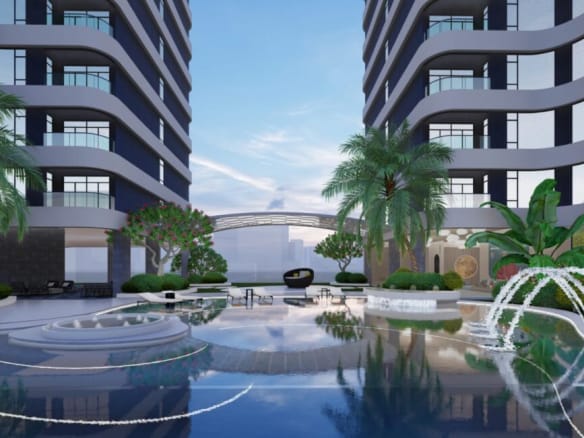
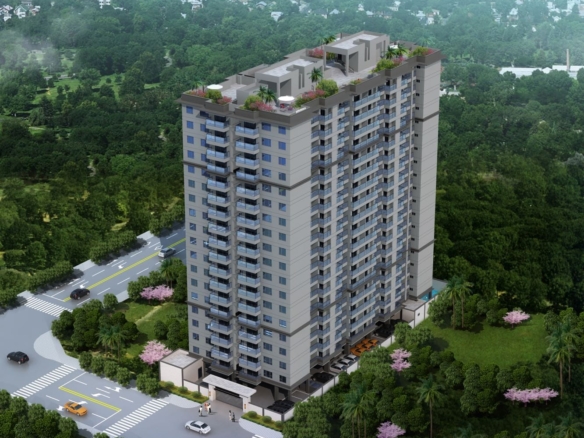
The gated community developments that have been built in Lavington over the last decade have added another layer of security infrastructure to the neighbourhood’s residential landscape. A well-managed Lavington gated development with professional security company guarding, controlled access, CCTV coverage, and armed response coverage provides security conditions that are competitive with Karen and Runda gated estates at a closer-to-the-city location. For luxury buyers who value both security and commute practicality, the Lavington gated community option provides the best available balance between these competing priorities within the Nairobi residential market.
For the full security analysis, see Safety and Security in Lavington.
The Investment Dimension: Why Luxury Buyers Choose Lavington Over Higher-Yield Options
Most Lavington luxury home buyers are not primarily motivated by investment return calculations. They are buying for occupation and for the lifestyle that the neighbourhood provides. But the investment characteristics of their purchase are nonetheless important and the fact that these characteristics are genuinely favourable is a significant secondary consideration for buyers who are also experienced investors.
The land value appreciation story in Lavington is compelling and well-documented over multiple decades of the Nairobi residential market. Well-located land in a supply-constrained, high-demand, owner-occupier-majority neighbourhood appreciates consistently over long time horizons in ways that yield-seeking apartment investment in developer-led markets does not. The Lavington plot that a buyer acquires today as the substrate of a luxury home purchase is an asset whose long-term value trajectory is supported by structural scarcity, growing demand from an expanding high-income professional class, and the protection against competitive supply dilution that the neighbourhood’s zoning and character provide.
The diplomatic and executive rental market that has been discussed in the Westlands investment guide is equally present in Lavington, and in some respects more active. Lavington’s combination of school access, commute practicality, residential quality, and security makes it a natural choice for the senior diplomatic and corporate families who are the most stable and highest-paying residential tenants in the Nairobi market. Properties that are genuinely competitive for this market, meaning that they are professionally furnished, have verified backup systems, are professionally managed, and are listed through agents with genuine corporate housing relationships, consistently achieve rental returns that provide a respectable income stream alongside the long-term land appreciation case.
For the full investment analysis, read Investment Potential of Lavington Real Estate.
Lavington vs Karen: The Honest Comparison for Luxury Buyers
The comparison between Lavington and Karen is the one that most high-end Nairobi property buyers engage with at some point in their decision process, and it deserves an honest treatment rather than a diplomatic both-are-great conclusion.
Karen offers more. More space, larger average plots, more mature garden character across the neighbourhood as a whole, more prestigious address recognition in the Nairobi social hierarchy, more separation from the city’s commercial intensity, and more of the specific character that the colonial-heritage luxury suburb narrative has built around it over several decades. For buyers who are making a once-in-a-generation property purchase and who want the maximum of each of these things, Karen’s premium over Lavington is justified and the commute cost is a trade-off they are prepared to make.
Lavington offers enough. Not more than Karen on any of these specific dimensions, but enough on all of them combined with meaningfully better commute access, meaningfully better proximity to the international schools that are the specific school requirement of many luxury buyers, meaningfully better Valley Arcade amenity access, and a price point that is typically 20 to 35 percent below equivalent Karen properties. For buyers who have assessed their actual daily life requirements honestly and found that Karen’s specific advantages are not worth their specific costs in commute time, price premium, and distance from daily amenities, Lavington’s enough-on-everything combination is the more rational choice.
The buyers who choose Lavington over Karen are typically not settling. They are making a different and equally considered decision about what they actually want from their residential address as opposed to what signals the most strongly in Nairobi’s social conversation about residential prestige. That is a distinction worth making clearly rather than leaving it as an implied consolation for the buyer who did not quite achieve a Karen address.
For the full Karen comparison, read the Karen Neighbourhood Guide. For the comparison with Kileleshwa that many Lavington buyers are also making, see Lavington vs Kileleshwa Comparison.
Who Lavington’s Luxury Market Serves Best
The luxury home buyer who Lavington serves best is a senior professional or established family household that has passed through the life stages where urban convenience and social energy were the primary residential priorities and has arrived at a stage where residential quality, family environment, and the particular pleasures of house and garden living in an established neighbourhood matter most.
They typically have school-age children whose educational requirements drive a significant portion of the neighbourhood selection logic. They are likely to be in Nairobi for the medium to long term rather than on a short assignment, which means they are optimising for the residential quality they will experience over years rather than the convenience they need for a six-month posting. They have professional lives that involve commutes to the CBD, Upper Hill, or Westlands rather than to Karen or the outer southern suburbs, which means Lavington’s commute position serves them better than Karen’s. And they have the financial capacity to enter a market whose prices reflect genuine land scarcity and demand-supply dynamics rather than the speculative pricing cycles that have affected Nairobi’s apartment-corridor markets.
This buyer profile is not rare. It represents a substantial and growing segment of Nairobi’s residential market, and the consistency with which this segment has chosen Lavington across different decades and different market cycles is the most reliable evidence available that the neighbourhood delivers what it promises to the people it is designed to serve.
Browse available Lavington properties at homes for sale in Nairobi Kenya and executive apartments for sale in Nairobi. Continue with the Lavington cluster at Best Gated Communities in Lavington, Apartments vs Villas in Lavington, and Investment Potential of Lavington Real Estate. Return to the Complete Guide to Living in Lavington Nairobi for the full article index, or go back to the Nairobi Neighbourhood Guide to place Lavington’s luxury offering in the context of the full Nairobi residential market.

Join The Discussion