

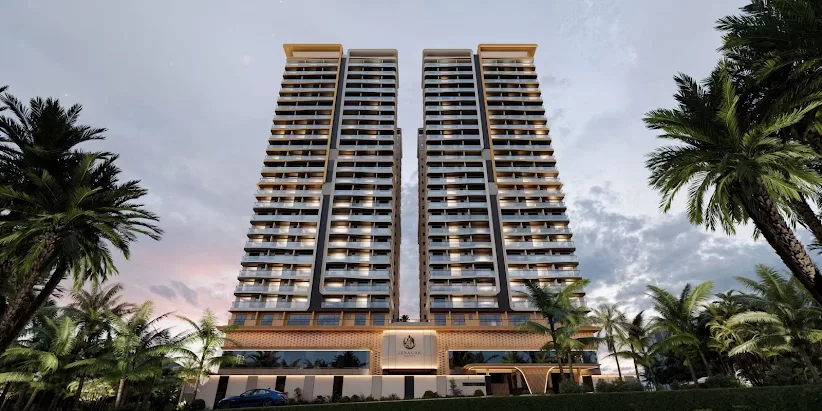
Yes, Kilimani can be a good property investment in 2026, but only if you buy the right product, at the right price, with the right strategy. It is not a blanket buy. The neighbourhood has genuine oversupply in certain segments, meaningful yield compression in the standard long-let market, and a history of developers overpromising returns that did not materialise. Buyers who go in without understanding these dynamics will underperform. Buyers who do understand them can find genuinely attractive entry points and income-generating assets that the wider market is currently undervaluing.
This guide covers the full investment picture: what has happened to the Kilimani market over the last decade, where the genuine opportunities sit today, what yields are actually achievable versus what is typically marketed, which unit types and building tiers perform best, and how Kilimani compares to its nearest investment alternatives in the Nairobi market.
For the Kilimani neighbourhood, read the Complete Guide to Living in Kilimani Nairobi and Average Property Prices in Kilimani first.
What Happened to the Kilimani Market: A Decade in Review
Understanding where the Kilimani investment market is today requires understanding how it got here. The story of the last decade is largely a story of oversupply meeting optimistic projections, and the correction that followed.
Between roughly 2010 and 2019, Kilimani was one of the most active development zones in sub-Saharan Africa on a per-square-kilometre basis. Developers from Kenya, the Gulf, and South Africa recognised the combination of central location, growing professional demand, and relatively affordable land compared to Westlands and Lavington, and began converting bungalows and small commercial plots into high-density residential blocks at a pace that eventually exceeded the neighbourhood’s absorption capacity.
At the peak of this cycle, off-plan apartments in Kilimani were being marketed to diaspora investors and local buyers with projected rental yields of 8 to 12 percent on long-let terms and capital appreciation assumptions that implied significant value growth within five years of completion. Some of these projections were achievable for early entrants into the cycle. Most were not achievable for buyers who entered in 2017 or later, when supply had already outpaced the rental demand base.
The correction came through several channels simultaneously. Rental asking prices stagnated and then declined in real terms as competing blocks offered concessions to attract tenants. Void periods lengthened. Resale values in the off-plan segment failed to appreciate as projected, leaving some buyers with assets that were worth less than their original purchase price in real terms when they tried to exit. The COVID-19 period of 2020 and 2021 accelerated these pressures, particularly for the serviced apartment and short-let segment which lost international visitor income almost entirely for an extended period.
The period from 2022 to 2024 represented a shaking-out phase. Distressed sellers entered the market. Management companies in weaker buildings lost income and reduced service levels, which pushed vacancy rates higher and created a feedback loop of deteriorating asset quality. At the same time, the short-let market began recovering as international travel resumed and the NGO and corporate housing sector stabilised.
In 2025, the Kilimani market is neither in freefall nor in recovery boom. It is in a consolidation phase where quality assets in well-managed buildings are finding genuine demand while weak assets in poorly managed buildings continue to struggle. This bifurcation is the defining feature of the current market and the central fact that any investment analysis must address.
Current Rental Yields in Kilimani: What Is Actually Achievable
Yield claims in the Kilimani market require careful scrutiny. The figures that circulate in developer marketing materials and from some agents tend to reflect gross yield calculations based on optimistic occupancy assumptions and asking rents rather than achieved rents. The picture from actual market participants is more nuanced.
Long-Let Gross Yields
For standard unfurnished long-let apartments in Kilimani, gross yields in the current market sit in the following ranges:
- Studio apartments: 4.5 to 6 percent gross yield. The combination of oversupply in this segment and limited tenant demand for small units at Kilimani price points makes studios the weakest performing unit type on a yield basis. Many studios in Kilimani are achieving rents that imply gross yields below 5 percent when purchased at current asking prices.
- 1-bedroom apartments: 5 to 7 percent gross yield. Better than studios but still subject to significant supply competition. Buildings with strong management and genuine amenities sit at the upper end. Standard mid-range blocks sit in the 5 to 6 percent range.
- 2-bedroom apartments: 5.5 to 7.5 percent gross yield. The most liquid segment with the most reliable tenant demand. Well-positioned 2-beds in tier-one buildings can achieve the upper end of this range consistently. The mid-range sits around 6 to 6.5 percent for buyers who purchase at current realistic transaction prices rather than inflated asking prices.
- 3-bedroom apartments: 5 to 7 percent gross yield. Lower absolute yield than 2-beds in many cases but with lower vacancy rates and longer average tenancy terms, which improves net yield by reducing the cost of turnover and void periods.
These are gross figures. Net yields, after deducting service charges, management fees, maintenance provisions, insurance, and periodic refurbishment costs, are typically 1.5 to 2.5 percentage points lower. A gross yield of 7 percent on a well-managed 2-bedroom apartment translates to a net yield of approximately 4.5 to 5.5 percent after realistic cost deductions. This is a reasonable but not exceptional return for an illiquid asset in an emerging market, and investors should calibrate their expectations accordingly.
Short-Let and Serviced Apartment Yields
The short-let segment is where Kilimani’s investment case becomes genuinely interesting. For professionally managed furnished units operating on short-let platforms, gross yields in the range of 8 to 12 percent are achievable for well-positioned, well-reviewed, and well-managed properties. The top end of this range requires consistent five-star guest experience standards, a responsive co-hosting or management arrangement, and a unit that genuinely differentiates itself on the platform through quality photography, responsive communication, and competitive pricing strategy.
The key word throughout that description is “professionally managed.” Short-let yields that look attractive on paper collapse quickly when management is passive. A unit that goes unreviewed, has inconsistent cleaning standards, or has maintenance issues that generate negative guest feedback will see occupancy and nightly rates decline rapidly in the transparent review environment of modern short-let platforms. The investors who achieve 10 to 12 percent gross yields in the Kilimani short-let market are running what is effectively a hospitality operation, not a passive investment.
For investors who cannot or do not want to operate at this level of engagement, a co-hosting arrangement with one of the several professional short-let management companies operating in Kilimani is the practical alternative. These companies typically charge 20 to 25 percent of gross income in management fees, which reduces gross yield by around 2 to 3 percentage points but provides the operational infrastructure required to maintain performance standards without direct involvement from the owner.
Capital Appreciation: The Honest Assessment
Capital appreciation in the Kilimani apartment market is not the investment thesis for 2025. That is a direct statement and it needs to be said clearly, because a significant proportion of the investment marketing in the neighbourhood still implies or explicitly promises capital growth that the fundamentals do not support in the near to medium term.
The structural reason appreciation is constrained in Kilimani is supply. Unlike Karen or Runda, where zoning restrictions and large plot sizes physically limit the number of new units that can be built, Kilimani has been zoned for high-density development and has significant remaining development capacity on plots that have not yet been built out. As long as new supply continues to enter the market, the price ceiling on existing apartments is anchored to replacement cost rather than driven higher by scarcity.
Replacement cost in Kilimani, accounting for current land values, construction costs, and developer margins, puts the production cost of a new 2-bedroom apartment in a standard mid-range block at roughly Ksh 12 million to Ksh 16 million depending on location and specification. Existing apartments competing with this new supply cannot trade significantly above these levels on a sustained basis, and any appreciation in the near term is likely to track inflation rather than outpace it.
There are scenarios in which Kilimani apartment values could appreciate meaningfully. If new supply completions slow significantly, if population growth and professional household formation continues to absorb existing stock, or if a major infrastructure improvement such as a light rail or BRT connection significantly enhanced the neighbourhood’s accessibility, values could move higher. None of these scenarios is imminent enough to underpin a near-term appreciation thesis.
The medium-term picture, over a ten to fifteen year horizon, is more interesting. Nairobi’s overall population and economic growth trajectory will eventually absorb the existing oversupply and create conditions for genuine price appreciation in well-located urban neighbourhoods. Kilimani’s central location and amenity density position it well for this longer cycle. But investors with a five-year horizon should not be buying Kilimani apartments primarily for capital appreciation. They should be buying for yield.
The Best Investment Strategy for Kilimani in 2025
Strategy One: Short-Let Income Generation
The highest-returning investment strategy available in Kilimani right now is acquiring a well-located 2-bedroom apartment in a tier-one building, furnishing it to a genuine hospitality standard, and operating it on a short-let basis either directly or through a professional co-hosting arrangement. The capital requirement for this strategy including acquisition, furnishing, and initial operating costs is in the range of Ksh 20 million to Ksh 30 million for a credible setup. The income potential, properly managed, justifies a reasonable return on this capital even without significant appreciation assumptions.
The selection criteria for this strategy are specific. The building must have reliable backup power and water, because power cuts and water supply failures generate immediate negative reviews and booking cancellations. The unit must be on a floor with adequate natural light and low street noise, because guest reviews consistently penalise these issues. The location within Kilimani should be within walking distance of at least one commercial strip with restaurants and amenities, because walkability is a genuine competitive differentiator on short-let platforms for the business travel segment.
Strategy Two: Distressed Asset Acquisition
The Kilimani market currently has a meaningful pipeline of motivated sellers: investors who bought off-plan between 2017 and 2020 at prices that have not been validated by the rental market, owners who are carrying service charge arrears in poorly managed buildings, and estate liquidations where properties need to sell within defined timeframes. These sellers will accept prices that represent genuine discounts to replacement cost.
Buying distressed assets in Kilimani requires the ability to transact quickly, the due diligence capacity to identify buildings whose management problems are fixable versus those whose structural or management issues are terminal, and the capital to renovate units that have been allowed to deteriorate. For investors with these capabilities, distressed asset acquisition in Kilimani can generate entry yields of 7 to 9 percent on long-let terms even without short-let premium pricing.
The critical due diligence point for this strategy is building selection. A distressed unit in a well-managed building is a recoverable asset. A distressed unit in a poorly managed building is a liability that will continue to deteriorate regardless of how well the unit itself is renovated. The time spent understanding the building’s management quality, maintenance history, and financial position before committing is always time well spent.
Strategy Three: Quality Long-Let at Realistic Yields
For investors who want a lower-management, more passive income stream, buying quality 2-bedroom or 3-bedroom apartments in tier-one Kilimani buildings at current realistic transaction prices and letting them on long-term furnished or unfurnished leases to the corporate and NGO market is a viable strategy. The gross yields of 6 to 7.5 percent are not spectacular but they are reliable, and the tenant quality in the corporate and diplomatic segment reduces the management burden and void period risk that characterise the standard residential letting market.
This strategy works best for investors who already have the relevant professional networks to access corporate tenants directly, or who are willing to work with an established letting agent with a track record of placing diplomatic and corporate clients in the Kilimani market. Cold-start marketing to this segment from scratch takes time and requires a unit that genuinely meets the finishes and management standards that corporate housing managers expect.
Which Unit Types Perform Best as Investments
Not all unit types in Kilimani carry equal investment merit. Here is the honest ranking based on current market performance:
Best performing: 2-bedroom apartments in tier-one buildings. The combination of the deepest rental demand pool, the widest range of strategies available (long-let, furnished let, short-let), and the best resale liquidity relative to other unit types makes the 2-bedroom in a quality building the strongest risk-adjusted investment in the Kilimani market. Buy in the Ksh 14 million to Ksh 20 million range for a current-generation unit in a well-managed block and the yield and liquidity fundamentals work.
Second best: 3-bedroom apartments with DSQ in tier-one buildings. Lower absolute yield than 2-beds but superior vacancy and tenancy stability. The DSQ provision significantly expands the addressable tenant market to include families and senior executives who require domestic staff accommodation. Entry price range of Ksh 22 million to Ksh 35 million for a quality unit.
Avoid unless buying distressed: 1-bedroom and studio apartments. The oversupply in this segment is most acute and the recovery timeline is longest. Studios in particular have a structurally weak investment case in Kilimani that requires exceptional management to overcome. If acquiring at deeply distressed prices for short-let conversion, the arithmetic can work, but this requires active management and genuine hospitality operational capability.
Kilimani vs Kileleshwa vs Westlands: Where Should You Invest?
Investors comparing Kilimani against its nearest investment alternatives should understand the specific differences in how each market performs.
Kileleshwa offers slightly lower entry prices than Kilimani for comparable quality units, with a tenant profile that skews toward longer tenancy terms and lower turnover. The short-let opportunity is less developed in Kileleshwa than in Kilimani due to lower walkability and fewer tourist-facing amenities, but the long-let stability is stronger. For investors who prioritise steady income over maximum yield, Kileleshwa is a reasonable alternative. Read the full comparison at Kileleshwa vs Kilimani.
Westlands commands higher entry prices than Kilimani across all unit types, but also commands higher rents, particularly in the corporate and diplomatic letting segment. The short-let market in Westlands is competitive with Kilimani’s. The net yield differential between Westlands and Kilimani for comparable quality assets is narrower than the gross price difference suggests, because Westlands’ higher rents partially offset its higher entry costs. For investors with larger capital commitments, Westlands deserves serious consideration alongside Kilimani. See Westlands vs Kilimani for a full comparison.
For a broader view of investment opportunities across all of Nairobi’s residential market, see the Nairobi Neighbourhood Guide and the dedicated article on Areas With the Highest Property Appreciation in Nairobi.
Key Risks Every Kilimani Investor Must Understand
No investment guide is complete without a direct treatment of the risks. These are the specific risks that apply to Kilimani property investment in the current environment.
Continued oversupply. New developments that began construction in 2022 and 2023 will complete during 2025 and 2026, adding further supply to a market that has not yet fully absorbed the previous development cycle. Investors entering now should assume that rents will remain under pressure in the standard long-let segment for at least two to three years.
Building management deterioration. Some Kilimani buildings that were well managed at opening have seen management quality decline as service charge collection rates fell and maintenance funds were depleted during the correction period. Buying into a building whose management quality is declining rather than improving is the single most common mistake made by Kilimani investors, and it is preventable with adequate due diligence.
Interest rate sensitivity. The Kenyan mortgage market is expensive by international standards, with commercial mortgage rates typically running at 13 to 16 percent per annum. Investors using significant leverage at these rates need rental income to cover financing costs from day one, which requires achieving the upper end of the yield ranges described in this guide without delay. Cash buyers or investors with access to lower-cost capital from abroad have a significant structural advantage in the current environment.
Tenant quality variation. The Kilimani rental market attracts a wide range of tenants across the quality spectrum. Investors who do not have adequate tenant screening processes in place, or who rely on building management companies to handle tenant selection without independent oversight, risk placing tenants who damage units, fall into rent arrears, or create disputes that are time-consuming and costly to resolve.
Regulatory environment. Kenya’s property rental market is subject to the Landlord and Tenant Act and various county government regulations that affect service charge structures, lease terms, and eviction procedures. Investors who are not familiar with this regulatory environment should seek independent legal advice before purchasing, particularly if they are based outside Kenya and managing their investment remotely.
The Bottom Line for Kilimani Investors
Kilimani is a market that rewards informed, selective, actively-managed investment and punishes passive, undifferentiated approaches. The investors who are performing well in Kilimani right now are not those who bought the most units or the cheapest units. They are those who bought the right units in the right buildings, set up proper management infrastructure, and matched their strategy to the actual demand characteristics of the market rather than the projected demand characteristics from developer presentations.
If you are entering the Kilimani market in 2025, the three things that will determine your outcome are the building you choose, the price you pay relative to current achievable rents, and the management approach you implement from day one. Get these three things right and Kilimani offers a genuinely viable income-generating real estate investment. Get them wrong and you will join the cohort of investors whose Kilimani experience has been a source of frustration rather than return.
Browse currently available apartments for sale in Kilimani, explore the Best Apartment Complexes in Kilimani to understand which buildings consistently outperform, and compare Kilimani’s investment credentials against the wider market at best investment property for sale in Kenya.
Return to the Kilimani Neighbourhood Guide for the full article cluster or go back to the Nairobi Neighbourhood Guide to compare investment potential across Nairobi’s major residential zones.

Join The Discussion