

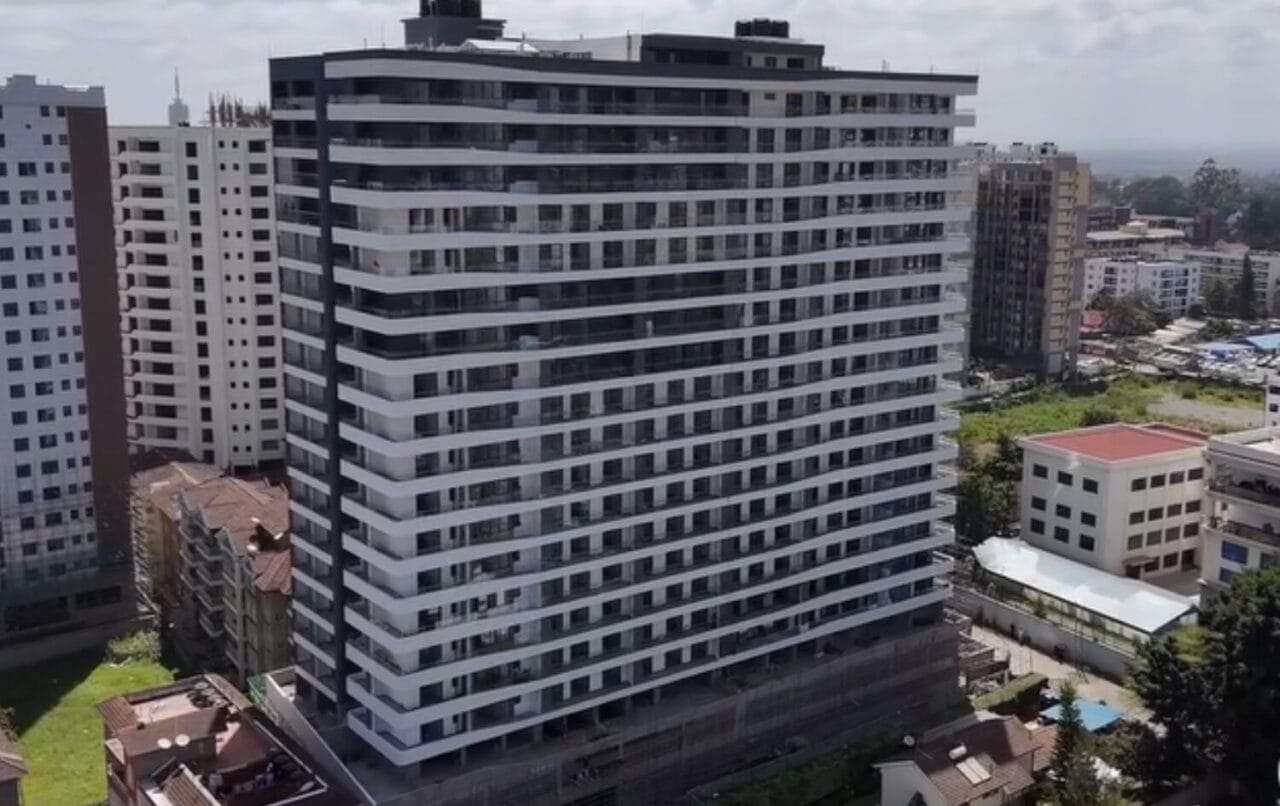
Security is the question almost every person asks before committing to a Kilimani address, whether they are signing a lease, making an offer on an apartment, or helping a family member relocate to Nairobi for the first time. The honest answer is that Kilimani is a reasonably safe neighbourhood by Nairobi standards, but that answer comes with enough nuance to fill this entire guide.
The neighbourhood is not uniform. The security reality on a quiet residential street off Riara Road is categorically different from the reality on a busy commercial strip along Ngong Road on a Friday evening. The experience of a resident in a tier-one apartment block with controlled access and armed response is categorically different from someone in an older standalone house with a single watchman and a padlock on the gate. Kilimani’s security situation is best understood as a patchwork rather than a single condition, and navigating it well starts with understanding which parts of that patchwork are which.
This guide covers the specific crime patterns that affect Kilimani residents, the streets and zones that carry higher and lower risk, what good building security looks like in practice, and the daily habits that make the difference between a resident who feels comfortable in the neighbourhood and one who does not. For the broader neighbourhood context, read the Complete Guide to Living in Kilimani Nairobi.
The Overall Security Picture in Kilimani
Kilimani sits in the upper tier of Nairobi’s residential security landscape. It is significantly safer than Eastlands, Mathare, or parts of Embakasi. It compares reasonably well with Westlands, though Westlands’ nightlife concentration creates its own specific security dynamics late at night. It is less secure than Karen, Runda, or Muthaiga, where lower density, gated estate structures, and a wealthy resident base that funds very good private security create conditions that a dense urban neighbourhood like Kilimani cannot replicate.
The Kilimani Police Station on Kilimani Road provides a first-response capability for the neighbourhood, and its proximity is a genuine asset. Response times to serious incidents in Kilimani are generally faster than in outer suburbs simply because the station is centrally located. That said, as in most Nairobi police jurisdictions, residents who rely exclusively on police response for personal security rather than investing in private arrangements will find the coverage uneven.
The General Service Unit and the Anti-Stock Theft Unit have periodic deployments in and around the Kilimani area during periods of elevated security concern, and the neighbourhood benefits from the broader Nairobi metropolitan policing umbrella in ways that less visible suburbs do not.
Types of Crime That Affect Kilimani Residents
Opportunistic Street Crime
This is the most common security concern for Kilimani residents and it is the one that most directly affects daily quality of life. Phone snatching, bag theft, and pickpocketing are the dominant forms, and they concentrate in predictable locations and at predictable times.
The commercial strips along Ngong Road, particularly the pavements near Junction Mall and Adams Arcade, are the highest-risk zones for phone snatching. The pattern is consistent: a pedestrian walking with their phone visible, either looking at the screen or talking, is approached rapidly by one or two individuals on foot or motorcycle and the phone is taken before the target has time to react. The same pattern occurs near ATM vestibules when people are seen withdrawing cash or handling cards in view of the street.
Bag theft follows a similar opportunistic pattern near markets, bus stages, and the congested pedestrian areas around the shopping centres. The risk rises significantly on Friday and Saturday evenings when foot traffic is higher, some pedestrians are less alert due to alcohol, and the reduced police visibility at street level after 9 PM creates more opportunity for quick-turnover theft.
In practice, Kilimani residents who have been in the neighbourhood for more than a few months develop a set of habits that reduce exposure to this risk to a very manageable level. Keeping phones in a pocket or bag rather than in hand while walking, being briefly aware of the environment around ATMs before and after using them, and avoiding the busiest commercial pavements on foot late at night are all simple adjustments that significantly reduce the probability of an incident.
Residential Burglary
Residential burglary in Kilimani follows a clear pattern. Standalone houses, older apartment blocks with inadequate access control, and ground-floor units in buildings where perimeter security is weak carry the highest burglary risk. Upper-floor apartments in well-managed blocks with controlled access, CCTV coverage, and professional security guarding carry burglary rates that are very low.
Most residential burglaries in Kilimani occur during daytime hours when residents are at work and the building is least active, and they exploit either inadequate perimeter security or insider knowledge from domestic workers, contractors, or delivery personnel who have previously accessed the property. This second vector is worth taking seriously. Simple precautions including changing locks when moving into a new unit, not leaving keys with multiple parties unnecessarily, and being consistent about who has access to your home significantly reduce the risk from this direction.
Car break-ins in parking areas are a related concern, particularly in buildings with open surface parking rather than controlled basement or podium parking. Vehicles with valuables visible on seats or dashboards are consistently targeted. The solution is simple and worth repeating: leave nothing visible in a parked car in Kilimani, including bags, phone chargers, and loose change that might suggest a larger find to someone testing vehicle security.
Carjacking and Vehicle Crime
Carjacking in Kilimani is significantly less common than in some other Nairobi areas but it is not absent. The risk concentrates at specific points: the moment of entering or exiting a vehicle in a poorly lit or isolated location, the queue at estate or building gates during peak traffic hours when vehicles are stationary and cannot move quickly, and the first 100 to 200 metres of travel from an identifiable regular stopping point such as a home or frequently visited location.
Modern carjacking in Nairobi is increasingly sophisticated in its targeting. Vehicles of obvious value are noted, resident movements are sometimes observed over multiple days before an attempt, and the timing tends to be chosen for maximum vulnerability. Residents who drive high-value vehicles in Kilimani and who are not already using a private security escort or GPS tracking service should give genuine consideration to these measures rather than treating them as excessive.
For the majority of Kilimani residents driving standard vehicles, the practical precautions are straightforward: vary your routes and timings periodically, be aware of vehicles that appear to be following you, avoid being stationary with windows down in isolated locations at night, and ensure your vehicle’s central locking engages immediately upon entry rather than requiring a separate step.
Cybercrime and Fraud
This category of crime receives less attention in neighbourhood security guides but affects Kilimani residents at rates that reflect the neighbourhood’s high proportion of digitally active, financially comfortable professionals. M-Pesa fraud, SIM swap attacks, online banking fraud, and investment scams targeting the neighbourhood’s professional demographic are a consistent and growing concern.
The specific vectors worth being aware of in Kilimani include fraudulent delivery notifications targeting online shoppers who receive frequent deliveries, impersonation of building management companies requesting payment of service charges through unofficial channels, and social engineering through WhatsApp targeting residents whose numbers have been harvested from estate or block group chats. These are not theoretical risks. They affect Kilimani residents regularly and the losses can be substantial.
Safest and Highest-Risk Areas Within Kilimani
Kilimani’s internal geography produces meaningful variation in security conditions across different streets and zones. Understanding this geography allows residents to make better decisions about where to live and how to navigate the neighbourhood.
Lower-Risk Residential Pockets
The residential streets that run off Riara Road heading west toward the Lavington boundary are among the quietest and safest in the neighbourhood. Lower traffic volumes, a more settled long-term resident population, and greater distance from the commercial strips that generate the most opportunistic crime combine to make this pocket noticeably calmer than the denser parts of Kilimani. Several well-managed apartment blocks in this area maintain good security standards and benefit from the quieter street environment around them.
The upper section of Denis Pritt Road near the Nairobi Arboretum has a similar character. The proximity to the Arboretum itself, which is a controlled-access green space, limits the through-traffic and transient foot traffic that create opportunity for street crime. Residents in this pocket consistently report lower incidence of petty crime than those living in the more commercially adjacent parts of the neighbourhood.
Parts of Elgeyo Marakwet Road away from the busy Ngong Road junction carry lower risk than the junction area itself. As you move along this road away from the Adams Arcade commercial cluster, the residential character strengthens and the commercial-strip crime patterns diminish.
Higher-Risk Zones and Times
The Ngong Road frontage between Junction Mall and Adams Arcade is the highest foot-traffic zone in Kilimani and carries the highest concentration of opportunistic street crime. This does not mean it should be avoided, which would be impractical given how central it is to the neighbourhood’s daily functioning. It means that the specific behaviours that reduce exposure to phone snatching and bag theft are most important here.
The area around the Kilimani matatu stage and the informal parking areas adjacent to the commercial strips carries elevated risk, particularly in the evening when the combination of cash transactions, alcohol, and reduced lighting creates a more permissive environment for opportunistic crime. Residents who park in this area or use public transport from these points late at night should be aware of their surroundings and complete financial transactions discreetly.
Ground-floor addresses immediately adjacent to Ngong Road and Argwings Kodhek Road carry higher residential burglary risk than upper-floor addresses set back from the main roads. The combination of street-level access, high foot traffic providing cover for potential intruders, and the reduced supervision that busy streets paradoxically create makes these addresses the least secure residential options in the neighbourhood.
What Good Building Security Looks Like in Kilimani
For apartment residents, the building’s security infrastructure is more important to daily safety than the neighbourhood’s general security level. A well-secured building in a higher-risk zone is safer to live in than a poorly secured building in a lower-risk zone. Here is what genuinely good building security looks like in the Kilimani market.
Access Control
The best-secured residential buildings in Kilimani operate visitor management systems that require all guests to be announced, verified, and logged before entry. Residents use fob, card, or biometric access rather than keys that can be copied. The vehicle entry point has a separate pedestrian gate so that cars and people do not enter through the same uncontrolled opening simultaneously. Delivery drivers and contractors are not admitted to the building interior without a resident escort or specific authorisation.
Buildings that rely on a single guard to manage a gate that vehicles and pedestrians use simultaneously, without any electronic verification or logging system, offer access control that is more performative than functional. A determined intruder will identify the gaps in a manual gate system relatively quickly.
CCTV Coverage
Good CCTV coverage in a Kilimani apartment block includes cameras at all vehicle and pedestrian entry and exit points, in all lift lobbies, in all stairwells, in the parking areas, and in common areas including the gym and pool where applicable. Critically, the cameras must be connected to a recording system with adequate storage that is actually reviewed when incidents occur. CCTV cameras that are present but not connected to a functioning recorder are a common shortcoming in mid-range Kilimani buildings and they offer residents the appearance of security without the substance.
Guarding Standards
The quality of a building’s security guards is determined more by the security company’s standards, training, and supervision protocols than by the physical presence of uniformed personnel. Guards who are on a long shift without rotation, who are not supervised by a security company supervisor making regular checks, and who are not empowered to enforce the building’s access control procedures will inevitably develop workarounds that compromise the building’s security over time.
Buildings contracted with reputable security companies that operate armed response and regular supervisory visits have measurably better security outcomes than those using the cheapest available guarding services. The difference in monthly cost to the building is often modest relative to the total service charge budget, but the security outcome difference is significant. When evaluating a Kilimani building, asking specifically which security company is contracted and what their response protocol involves is a reasonable and informative question.
Lighting
Adequate lighting in parking areas, stairwells, lift lobbies, and the building’s perimeter is one of the most cost-effective security investments a building management company can make. Most opportunistic crime requires a degree of concealment, and well-lit environments remove the concealment that makes crime viable. Buildings where common areas are consistently well-lit, where motion-sensor lighting activates in parking areas, and where the perimeter is illuminated after dark provide a meaningfully more secure environment than those where bulbs go unreplaced and perimeter lighting is unreliable.
Private Security Options for Kilimani Residents
Beyond building-level security, Kilimani residents who want enhanced personal security have a range of private options available that are well-developed in the neighbourhood given the density of the professional and diplomatic population.
Armed response subscription services from companies including G4S, KK Security, Securex, and several newer competitors offer residential coverage under monthly contracts that provide response to triggered alarms or distress calls. Response times in the Kilimani area for these services are generally faster than for police response, and the deterrent effect of a visible armed response sticker on a property or vehicle is meaningful.
GPS vehicle tracking is available from multiple providers and is increasingly standard for vehicles above a certain value in the Kilimani market. Recovery rates for tracked vehicles are meaningfully higher than for untracked vehicles, and the insurance premium reduction that some companies offer for tracked vehicles partly offsets the subscription cost.
Personal protective detail services are used by a small but present segment of Kilimani’s high-net-worth resident population, particularly those who are publicly visible, hold senior corporate or government positions, or who have received specific threats. Several reputable close protection companies operate in Nairobi with Kilimani-based staff.
Practical Daily Safety Habits for Kilimani Residents
The residents who feel most comfortable in Kilimani are not necessarily those in the most expensive buildings or those with the most elaborate security arrangements. They are those who have calibrated their daily behaviour to the neighbourhood’s specific risk profile and implemented a small set of consistent habits that reduce their exposure to the most common threats.
Keep your phone in a pocket or bag while walking on commercial streets, not in your hand or visible in a shirt pocket. Use ATMs inside shopping centres rather than on the street where possible, and complete your transaction quickly without handling cash in view of the entrance. Avoid walking along the Ngong Road pavement after 9 PM if you are alone, particularly between Junction Mall and Adams Arcade where the combination of traffic noise and reduced lighting creates vulnerability. If something feels wrong about a situation, trust that instinct and adjust your route or your pace without hesitation.
When driving, keep windows up and doors locked in slow traffic, particularly at junctions and during the long queues on Ngong Road during peak hours. Be aware of vehicles that pull up alongside you repeatedly. Park in well-lit, supervised areas when returning home late, and if your building’s parking is outside the main security perimeter, consider whether your usual parking time and location creates a regular predictable vulnerability.
For households with domestic workers, the simple step of doing a proper background check before employment, taking up references directly rather than accepting written letters, and registering new domestic employees with the building management company are habits that significantly reduce the most common vector for residential burglary in the neighbourhood.
Security Versus Other Nairobi Neighbourhoods
Kilimani’s security profile sits in a reasonable middle ground among Nairobi’s residential options. It is substantially safer than the high-density lower-income areas of the city where crime rates are higher and police presence is thinner. It is somewhat less secure than the outer luxury suburbs where lower density, gated community structures, and resident-funded private security create conditions that are difficult to achieve in a dense urban neighbourhood.
Karen’s security advantage over Kilimani, for example, comes primarily from lower population density and the gated estate structure that most Karen properties sit within. Runda’s security advantage comes from the combination of gated estate living and the proximity to the diplomatic community which funds exceptionally well-resourced neighbourhood security arrangements. These advantages are real but they come with trade-offs in commute time, amenity access, and property cost that many Kilimani residents have consciously chosen not to make.
For families with young children, the security differential between Kilimani and the outer luxury suburbs is worth weighing seriously. Children who walk to school, play in communal areas, or move independently within the neighbourhood are exposed to the street-level risks of a dense urban environment in a way that children in gated Karen or Runda estates are not. This is one of the factors that leads families with older children to eventually move from Kilimani to the outer suburbs even when they have been happy in the neighbourhood during earlier life stages.
For the professional without children, or the couple at an early career stage, Kilimani’s security profile is entirely workable with the habits and building selection criteria described in this guide. The trade-off of accepting somewhat higher street-level risk in exchange for Kilimani’s exceptional amenity access and central location is one that a large and satisfied residential population makes every day.
Read the Safety and Security in Westlands guide for a direct comparison of how the two neighbourhoods differ, or explore how security considerations affect residential choices across the city at the Nairobi Neighbourhood Guide. For families weighing security as a primary factor in neighbourhood selection, the Best Neighbourhoods in Nairobi for Families guide addresses this directly alongside schools, space, and lifestyle criteria.
Return to the Kilimani Neighbourhood Guide for the full cluster of articles covering every aspect of living, renting, buying, and investing in Kilimani.

Join The Discussion