

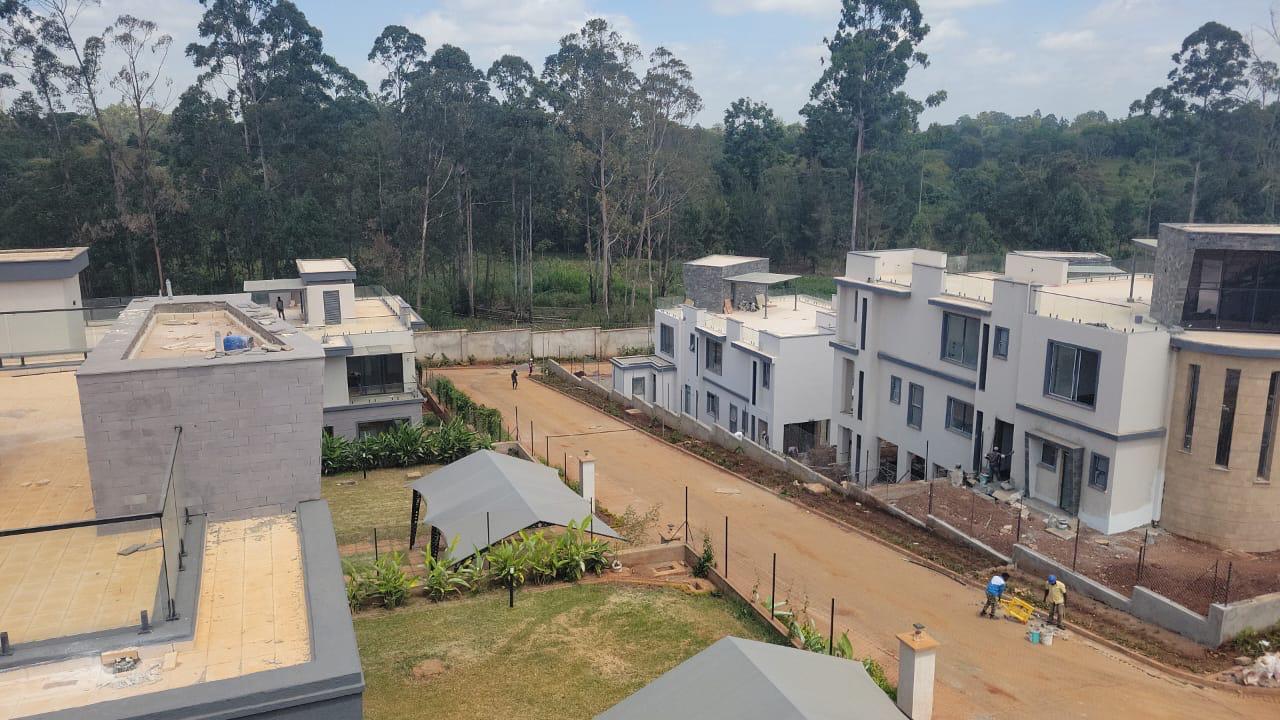
Westlands generates more polarised opinions about security than almost any other Nairobi neighbourhood, and the polarisation is entirely explained by the sub-area problem. A resident in a well-managed Spring Valley gated estate who has lived there for seven years will tell you Westlands is safe, well-secured, and that they sleep soundly every night. A resident in a ground-floor apartment on a Rhapta Road street adjacent to an entertainment venue who has been there for six months will tell you something quite different. Both are telling the truth. They are just living in different Westlands.
The security reality in Westlands in 2026 is shaped by three competing forces that are unique to the neighbourhood’s character. The first is the commercial intensity of its daytime environment, which brings large volumes of foot and vehicle traffic that create both the security infrastructure investment that protects residents and the anonymity that creates opportunity for opportunistic crime. The second is the nightlife concentration around Woodvale Grove and the entertainment district, which generates a specific set of late-night security risks that do not exist in any comparable residential neighbourhood in Nairobi. The third is the diplomatic and high-net-worth residential community in Spring Valley, Loresho, and Gigiri, which funds the private security infrastructure that makes this sub-area genuinely excellent from a residential security perspective.
Understanding how these three forces interact across the neighbourhood’s different sub-areas is the foundation of making smart residential security decisions in Westlands. This guide provides that understanding in detail, covering the specific crime patterns that affect the neighbourhood, the sub-areas where security conditions are strongest and weakest, what good building security actually looks like in practice here, and the daily habits that make a meaningful difference to resident safety.
This article is part of the Westlands Neighbourhood Guide cluster. For the broader neighbourhood context, start with the Complete Guide to Living in Westlands Nairobi. For a security comparison between Westlands and Kilimani, read Westlands vs Kilimani.
The Overall Security Picture in Westlands
Westlands sits in the upper-middle tier of Nairobi’s residential security landscape. It is significantly safer than the high-density lower-income areas of the city where crime rates are highest and police presence is thinnest. It compares broadly with Kilimani in its overall security profile, with meaningful differences in the specific crime patterns and time-of-day risk concentrations that reflect the different characters of the two neighbourhoods. It is less uniformly secure than Karen, Runda, or Muthaiga, where lower density, gated estate structures, and a resident-funded private security infrastructure create conditions that a commercially dense urban neighbourhood like Westlands cannot replicate across its full footprint.
The Westlands Police Station on Ring Road Westlands provides a first-response capability for the neighbourhood, and its proximity to most residential addresses in the Westlands zone means that response times to serious incidents are generally faster than in outer suburbs. The station’s jurisdiction includes both the residential and commercial zones of the neighbourhood, and the relatively high commercial tax base of the area has historically produced a level of police resource investment above the national average.
The private security industry in Westlands is exceptionally well-developed. The concentration of commercial offices, diplomatic residences, high-net-worth households, and international organisations in the neighbourhood creates sustained demand for the full spectrum of private security services, from armed response subscriptions and CCTV monitoring to executive protection and vehicle tracking. The major security firms including G4S, KK Security, Securex, and Top Fry Security all have significant Westlands operations, and the competition among them has produced service quality levels that are among the best available in Nairobi.
Crime Patterns That Affect Westlands Residents
Nightlife-Related Crime
This is Westlands’ most distinctive security challenge and the one that most directly affects the quality of life of residents living near the entertainment district. The concentration of bars, clubs, and late-night restaurants on Woodvale Grove and the surrounding streets creates conditions every Friday and Saturday night that generate crime patterns not found in the same intensity in any other Nairobi residential neighbourhood.
Phone theft, bag snatching, and opportunistic robbery peak between 11 PM and 3 AM in and around the entertainment district. The combination of large crowds, alcohol consumption, reduced lighting in specific areas, and the presence of individuals specifically targeting people leaving entertainment venues creates a concentrated risk window that is much higher intensity than the daytime and early evening risk profile of the same streets.
Carjacking attempts near the entertainment district, while not common in absolute terms, occur at rates meaningfully above the Westlands average during the late-night window. The targeting pattern follows the predictable logic of most Nairobi carjacking: vehicles of obvious value, drivers who are alone, and the moment of entering or exiting a vehicle in a poorly lit or isolated location. The entertainment district’s combination of high-value vehicles, solo drivers leaving at late hours, and the street-level chaos of a busy Friday night creates the targeting opportunity.
Drink spiking incidents have been reported at several Westlands entertainment venues over the years. This is not unique to Westlands within Nairobi’s nightlife landscape, but the concentration of entertainment venues and the volume of the late-night crowd makes it a more relevant consideration here than in less nightlife-intensive neighbourhoods. Residents and visitors who use the Westlands nightlife circuit should be aware of this risk and apply the standard precautions around accepting drinks from strangers and monitoring their own consumption levels.
The important contextual point is that these risks are concentrated in specific locations at specific times. Westlands is not a dangerous neighbourhood at 10 AM on a Tuesday. The elevated risk profile is specific to the entertainment district, specific to the late-night window on weekends, and specific to residents and visitors who are physically in or near the entertainment venues during these windows. Residents who do not frequent the nightlife circuit or who are returning to addresses well away from Woodvale Grove are barely affected by this risk profile at all.
Opportunistic Street Crime
Phone snatching, bag theft, and pickpocketing in Westlands follow the same pattern as in Kilimani and other dense Nairobi urban neighbourhoods, concentrated in commercial areas with high foot traffic, near ATMs, and at bus stages and matatu stops. The commercial strips along Waiyaki Way, around the Sarit Centre and Westgate Shopping Mall, and along Rhapta Road during peak shopping and commuting hours carry the highest daytime opportunistic crime exposure for pedestrians.
The specific risk behaviour for pedestrians in these areas is identical to the advice applicable in Kilimani: phones in pockets rather than in hands while walking, ATM use inside shopping centres rather than on the street where possible, financial transactions completed discreetly, and a general situational awareness about who is in the immediate vicinity when handling valuables. These are not burdensome behavioural adjustments for residents who have lived in any major African city, but they require recalibration for new arrivals from lower-crime urban environments.
Vehicle break-ins in parking areas remain a consistent concern across Westlands’ commercial parking zones. Shopping centre car parks and the surface parking areas adjacent to commercial buildings are the primary locations. The standard precaution of leaving nothing visible in a parked vehicle is as applicable here as anywhere else in the Nairobi urban environment and reduces the risk materially.
Residential Burglary
Residential burglary in Westlands follows the same structural pattern as in Kilimani: standalone properties and apartment buildings with weak access control carry meaningfully higher risk than upper-floor units in well-managed buildings with controlled access and professional guarding. The Spring Valley and Loresho sub-areas, where gated estate structures with perimeter security cover the majority of residential properties, have residential burglary rates that are among the lowest in Nairobi. The Rhapta Road apartment corridor and the commercial fringe, where building security quality varies significantly, show more variable burglary risk that tracks directly with the quality of individual building management.
Daytime burglary, targeting apartments when residents are at work, is the most common residential crime modality in Westlands’ apartment stock. The access vector is most often through inadequate building access control rather than through direct unit break-in, reinforcing the primacy of building-level security assessment over unit-level security assessment in the Westlands residential market.
Cybercrime and Financial Fraud
The professional and high-income character of the Westlands resident and business population makes it a specific target for the sophisticated cybercrime and financial fraud that has become an increasingly significant security concern across Nairobi’s wealthier residential and commercial zones. M-Pesa fraud targeting business accounts, SIM swap attacks enabling account takeovers, investment scams marketed through the professional networks that Westlands’ commercial density creates, and corporate email compromise targeting the financial transactions of Westlands-based companies are all documented and recurring problems.
The business community in Westlands is more specifically targeted by corporate financial fraud than residential populations in most other Nairobi neighbourhoods. Fraudulent invoicing, payment redirection scams targeting companies mid-transaction, and impersonation of senior executives in payment authorisation chains are reported regularly within the Westlands commercial community. Companies based in Westlands should treat cybersecurity investment and financial control procedures as a core operational security requirement rather than a peripheral IT consideration.
Security Conditions by Sub-Area
Spring Valley: Strongest Security in the Westlands Zone
Spring Valley has residential security conditions that rank among the best in Nairobi’s upper-middle and high-income residential landscape. The gated estate structure that characterises most Spring Valley residential properties provides a physical security architecture that is substantially more robust than the individual building security of the Rhapta Road apartment corridor.
The perimeter security of a well-managed Spring Valley estate combines controlled vehicle and pedestrian access with professional guarding from established security companies, CCTV coverage of all entry and exit points, armed response subscription coverage, and a resident community that is engaged and vigilant enough to notice and report unusual activity quickly. The diplomatic community character of the sub-area contributes to this security infrastructure because embassy and UN families are housed in properties whose security standards are verified and monitored by their employing organisations.
Street crime within Spring Valley’s estate boundaries is effectively negligible. The controlled access prevents the casual foot traffic through which opportunistic street crime operates. Vehicle crime is low because the parking within well-managed estates is itself within the secured perimeter. Residential burglary is rare because the estate structure removes the access opportunity that residential burglary requires.
The primary security consideration for Spring Valley residents is the transition between the security of the estate environment and the public road network when leaving for work, shopping, or social activities. This transition point, specifically the moment of entering or exiting a vehicle at the estate gate during predictable daily routines, carries a small but real carjacking risk for residents of obvious affluence in high-value vehicles. Varying departure times and routes where possible, and being alert at the gate transition moment, are the practical mitigations.
Loresho: Good Residential Security With Manageable Risk
Loresho’s security profile is similar to Spring Valley’s in character though slightly less uniform in quality due to the more varied housing stock and the presence of some standalone properties alongside the gated estate developments. The ridge location of much of Loresho provides a natural security advantage: fewer through routes, lower density of casual foot traffic, and a resident population that is settled and consistent enough to notice when something is out of place.
The gated estates in Loresho maintain security standards broadly comparable to Spring Valley’s, while the standalone properties vary more in the quality of their individual security arrangements. Buyers and renters of standalone Loresho properties should assess the specific security infrastructure of each property rather than relying on sub-area reputation alone. The difference between a Loresho standalone house with a proper perimeter wall, alarm system, and armed response subscription and one that relies on a single guard and a padlock is significant and worth investigating specifically.
Rhapta Road and Mpaka Road Corridor: Variable and Context-Dependent
The apartment corridor along Rhapta Road and Mpaka Road has security conditions that are more variable and more context-dependent than the sub-areas described above. The security experience of a resident in this sub-area is determined primarily by the quality of their specific building’s security infrastructure and secondarily by the specific street position of the building relative to the entertainment district and the main commercial roads.
Buildings in this sub-area that have invested in controlled access with electronic verification, functioning CCTV with recording, professional guarding from established companies with supervisory oversight, and adequate perimeter lighting provide a residential security environment that is adequate for most professional residents. Buildings that have not made these investments, or that were built to lower standards and have not been retrofitted, carry security conditions that are materially weaker and that generate the incidents that contribute to the more negative security narratives about the Rhapta Road corridor.
The proximity to the Woodvale Grove entertainment strip is the most significant variable for specific buildings in this sub-area. Buildings within 200 to 300 metres of the strip that have street-facing units on lower floors are exposed to the late-night risk profile of the entertainment district in ways that buildings set back from the strip are not. This is one of the most important factors in building selection for anyone considering the Rhapta Road corridor as a residential address, and it is worth investigating specifically rather than assuming all Rhapta Road addresses carry equivalent security risk.
Parklands: Settled Residential Security With Community Character
Parklands has a security profile that benefits from its settled, multigenerational community character. The South Asian family community that has lived in Parklands for generations has built strong neighbourhood watch and mutual security awareness structures that contribute to residential security in ways that more transient apartment-corridor populations do not. Residential burglary rates in the established Parklands residential areas are lower than in the more recently developed parts of Westlands.
The commercial strips along Parklands Road carry daytime opportunistic crime risks comparable to other Westlands commercial areas, and the same pedestrian precautions apply. The overall security character of Parklands as a residential environment is solid, reflecting the combination of community vigilance, adequate policing presence, and the physical character of a settled neighbourhood rather than a recently developed speculative residential corridor.
Westlands Commercial Fringe: Highest Daytime Commercial Crime Exposure
The area immediately around the Westlands roundabout and along the commercial frontages of Waiyaki Way and the connecting commercial streets carries the highest daytime commercial crime exposure of any sub-area in the broader Westlands zone. The volume of pedestrian traffic, the concentration of ATMs and financial services businesses, and the general commercial intensity create the conditions for opportunistic crime at rates above the residential sub-area averages.
For residents of apartments in the commercial fringe, the building-level security assessment is even more important than in the other sub-areas because the commercial environment immediately outside the building does not provide the natural security of a lower-traffic residential street. Well-managed buildings in the commercial fringe can still be excellent residential choices, but the due diligence requirement is higher and the consequences of choosing a poorly managed building are more directly felt.
What Good Building Security Looks Like in Westlands
The building security assessment framework for Westlands is broadly the same as described in the Safety and Security in Kilimani guide, with some Westlands-specific additions that reflect the neighbourhood’s particular risk profile.
Access Control
The best-secured residential buildings in Westlands operate access control systems with electronic verification for residents and a visitor management protocol that requires all guests to be announced and logged before entry. The vehicle entry point has boom gate control with a separate pedestrian gate rather than a shared opening that vehicles and pedestrians use simultaneously. Delivery vehicles and contractors are not admitted to building interiors without a resident escort or advance authorisation.
Buildings that rely on a single manual gate guard managing both vehicle and pedestrian entry without electronic verification are operating at a security standard that is insufficient for the risk profile of the Westlands commercial and entertainment environment. This is a more significant security gap in Westlands than in quieter residential neighbourhoods because the commercial density and nightlife proximity create more motivated and more experienced opportunistic security threats.
Noise and Security Monitoring Integration
This is a Westlands-specific security consideration that does not apply in the same way elsewhere. Buildings adjacent to or near the entertainment district that do not have adequate sound insulation between the public street environment and residential units also tend to have weaknesses in their security monitoring at exactly the time when monitoring matters most: the late-night weekend hours when the street environment around the entertainment district is most active and most unpredictable.
Buildings that have invested in double-glazed windows and adequate soundproofing for their street-facing units have typically also invested in the CCTV monitoring, guarding rotation standards, and access control quality required to operate securely in a high-activity late-night environment. The correlation is not universal, but buildings that have clearly thought about their specific urban context in their design and management tend to have done so comprehensively.
Late-Night Security Protocols
Quality Westlands residential buildings have specifically considered the late-night security protocols required for a neighbourhood with active entertainment venues nearby. This means guard rotation schedules that maintain full alertness standards during the 11 PM to 3 AM window on weekends rather than reducing staffing or allowing guards to rest during this period. It means CCTV monitoring that is actively watched during late-night hours rather than simply recording for post-incident review. It means a building management response protocol for incidents that is quicker and more decisive than might be necessary in a quieter residential neighbourhood.
When evaluating any Westlands apartment building, asking specifically about the late-night weekend security protocol and the security company’s staffing standards during these hours is a useful due diligence question that reveals a great deal about the building management company’s awareness of their specific operating environment.
Private Security Options for Westlands Residents
The private security market in Westlands is the most developed in Nairobi outside the gated ultra-luxury suburbs, reflecting both the high-income residential and commercial population and the more complex security environment that the neighbourhood’s nightlife and commercial intensity creates.
Armed response subscription services from the major Nairobi security companies are widely used across all Westlands residential sub-areas. Response times for armed response in Westlands are generally faster than in outer suburbs due to the security companies’ higher staffing density in the neighbourhood and the shorter distances between their Westlands patrol units and residential addresses. Several buildings have negotiated building-wide armed response contracts that provide coverage to all residents under a single agreement, which typically produces better pricing and response time commitments than individual unit subscriptions.
Vehicle GPS tracking and monitoring services are standard practice for high-value vehicles in Westlands given the specific carjacking risk profile of the neighbourhood, particularly for vehicles leaving the entertainment district late at night and for the regular journeys between Spring Valley and Loresho estates and the wider city. Recovery rates for tracked vehicles in Nairobi are meaningfully above those for untracked vehicles, and several insurance providers in the Kenyan market offer premium discounts for vehicles with active tracking subscriptions.
Executive protection services are used by a meaningful proportion of Westlands’ senior business and diplomatic community. Several reputable close protection operators have offices in or near the neighbourhood and maintain Westlands-specific patrol and response capabilities. For residents who have received specific security threats, who hold public profiles in business or politics, or whose assets and lifestyle create a targeting risk beyond the general population, professional advice on a personal security assessment is a worthwhile investment.
Practical Daily Safety Habits for Westlands Residents
The residents who feel most comfortable in Westlands are those who have adapted their daily behaviour to the neighbourhood’s specific risk profile without becoming anxious or restricted in their daily life. The adjustments required are modest and become second nature quickly for anyone who has lived in any major African city.
During the day, the same phone and bag awareness habits that apply in Kilimani apply in Westlands: devices in pockets rather than in hands near commercial streets, ATM use inside shopping centres rather than on the street, financial transactions completed away from the immediate view of passersby. Near the Sarit Centre and Westgate car parks during peak shopping hours, be briefly aware of who is in the vicinity when loading shopping into a vehicle.
For residents who use the Westlands nightlife circuit, the practical safety habits are somewhat more specific. Use app-based ride-hailing services for late-night returns rather than hailing informal taxis on the street. Stay in groups when moving between venues in the entertainment district late at night rather than moving alone, particularly on foot. Be aware of your drink at all times in entertainment venues and decline drinks from strangers regardless of how credible the social context appears. Inform someone you trust of your expected return time when going out late, not as a formal check-in protocol but as a simple mutual awareness habit that provides a safety net.
For residents of buildings near the entertainment district, the simple habit of varying the timing of late-night returns rather than maintaining a predictable pattern removes one of the few remaining targeting vulnerabilities that good building security cannot fully address. Predictable late-night patterns near entertainment venues are one of the most common elements in the targeting intelligence for opportunistic late-night crime.
For vehicle owners, the standard Nairobi precautions apply with additional emphasis given the Westlands carjacking history: central locking engaged immediately upon entry, windows up in slow traffic at junctions, no valuables visible in parked vehicles, and an awareness of vehicles that park or pull up alongside you repeatedly near your home or workplace.
Security Comparison: Westlands vs Kilimani vs Outer Suburbs
Westlands and Kilimani have broadly comparable overall security profiles with different crime pattern distributions. Westlands has a more concentrated and more intense late-night risk profile driven by its nightlife district that Kilimani does not have to the same degree. Kilimani has a more diffuse daytime petty crime distribution across its commercial strips that is broadly similar in character to Westlands’ daytime commercial risk but without the nightlife-specific late-night risk concentration.
Both neighbourhoods are meaningfully less secure than Karen, Runda, or Muthaiga, where the combination of low density, gated estate living, and an extremely well-resourced private security ecosystem creates residential security conditions that dense urban neighbourhoods cannot approach. The trade-off is the same one that frames the entire comparison between inner urban and outer luxury suburban living in Nairobi: more amenity access and shorter commutes to the commercial centre in exchange for a higher-intensity security environment that requires more active management.
For residents who are considering Westlands specifically for the Spring Valley or Loresho sub-areas, the security comparison with the outer luxury suburbs closes significantly. These sub-areas provide residential security conditions that are genuinely competitive with Karen and Runda while retaining proximity to the commercial and social infrastructure that urban Westlands provides and that the outer suburbs cannot.
For detailed security guidance in the comparison neighbourhoods, read Safety and Security in Kilimani, and for a full neighbourhood comparison that includes security as a key variable see Westlands vs Kilimani. For families who are weighing security as a primary factor in neighbourhood selection, the Best Neighbourhoods in Nairobi for Families guide addresses this directly alongside schools, space, and lifestyle criteria.
Return to the Complete Guide to Living in Westlands Nairobi for the full cluster of articles covering every aspect of living, renting, buying, and investing in Westlands, or go back to the Nairobi Neighbourhood Guide to compare the full residential landscape across the city.

Join The Discussion