


Schools in Kilimani: What Families Need to Know Before Choosing
Kilimani is home to a surprisingly strong concentration of schools for a neighbourhood that is not primarily marketed as a family destination. Within the neighbourhood’s boundaries or immediately on its edges, you will find public and private options spanning the Competency Based Curriculum, Cambridge International, French national curriculum, and faith-based programmes. The range covers nursery through secondary, and fees span from public school rates to mid-range private institutions that sit well below the fee levels charged by the international schools in Karen or Gigiri.
This guide covers every school located within Kilimani that a family resident in the neighbourhood would realistically consider. For each school, it provides the curriculum, the age range served, the location within Kilimani, and what parents consistently report as the reasons they chose it or the concerns they weighed before committing.
If you are still deciding whether Kilimani is the right neighbourhood for your family, read the Complete Guide to Living in Kilimani Nairobi and the Pros and Cons of Living in Kilimani first. For a comparison of how Kilimani’s family credentials stack up against other Nairobi neighbourhoods, see the Best Neighbourhoods in Nairobi for Families.
The 10 Schools in Kilimani: Quick Overview
- Makini Schools — CBC and Cambridge curriculum, nursery to secondary
- Lycée Français Denis Diderot (French School) — French national curriculum, maternelle to terminale
- Cavina School — British curriculum (Cambridge), nursery to Year 13
- Kilimani International School (KIS) — CBC and international elements, ECDE to primary
- Vineyard School — CBC, ECDE to primary
- Kilimani Junior Academy (KJA) — CBC, ECDE to upper primary
- St. Hannah’s Preparatory School — CBC, ECDE to primary
- Appleton Schools — CBC and Cambridge blend, nursery to secondary
- Light Academy — CBC (primary) and KCSE pathway (secondary), Islamic values-oriented
- Kilimani Primary School — Public school, CBC, standard 1 to 9
The sections below cover each school in detail. If you are relocating from outside Kenya or making a curriculum decision for the first time, the curriculum comparison section at the end of this guide will help you understand the differences between CBC, Cambridge, and the French system before you start visiting schools.
Makini Schools, Kilimani
Overview
Makini Schools is one of Kenya’s most recognisable private school brands, and the Kilimani campus is among its most established. Founded in 1978 by the late Dr. Mary Okello, Makini built its reputation on academic rigour, structured discipline, and consistent secondary examination performance. The Kilimani campus sits along Olof Palme Road and serves students from nursery through to secondary level.
Makini Kilimani offers both the Competency Based Curriculum for the Kenyan pathway and the Cambridge International pathway for families intending to pursue international university admissions. The dual-pathway structure is one of Makini’s key differentiators and is particularly valued by families who have not yet decided whether their children will sit KCSE or Cambridge IGCSE and A-Level examinations.
Curriculum and Age Range
The CBC pathway runs from ECDE through primary and junior secondary. The Cambridge pathway offers IGCSE and A-Level preparation for students in the upper secondary years. Students typically join the Cambridge track in early secondary, and the school’s guidance counselling provision helps families make this transition decision with adequate lead time.
Who Chooses Makini Kilimani
Makini Kilimani attracts a predominantly Kenyan upper-middle-class family profile, alongside a proportion of East African families from Uganda, Tanzania, and Rwanda who are based in Nairobi for professional reasons. The school’s long track record in the Kenyan market gives parents confidence in examination outcomes, and the dual-curriculum option removes some of the risk of committing too early to a single pathway.
Parents who choose Makini consistently cite the structured academic environment, the quality of the teaching staff, and the school’s community character as the primary reasons for their choice. Parents who found it less suitable have mentioned class sizes in some year groups and the relative lack of green outdoor space compared to campus schools in Karen or Lavington.
Practical Considerations
Traffic access to Makini Kilimani during the morning school run is a real consideration. Olof Palme Road and the surrounding streets experience congestion between 6:45 AM and 8:00 AM on school days. Families living within walking distance of the school are at a genuine advantage. The school operates a transport service for students in certain areas, which is worth enquiring about during the admissions process.
Lycée Français Denis Diderot (French School Nairobi)
Overview
The Lycée Français Denis Diderot, commonly referred to simply as the French School, is one of Nairobi’s most distinctive educational institutions. It is affiliated with the AEFE (Agence pour l’Enseignement Français à l’Étranger), the French government agency that oversees French schools abroad, and it delivers the full French national curriculum from maternelle (nursery) through terminale (the French equivalent of upper sixth form). The school is located in Kilimani along Raphta Road.
Students graduate with the French Baccalauréat, which is recognised by universities worldwide and carries particular weight for admissions to French, Belgian, Swiss, and international institutions. The Bac’s broad subject requirement across sciences, humanities, and languages makes it a strong preparation for the intellectual demands of European universities in particular.
Curriculum and Age Range
The French curriculum runs from maternelle at age three through to terminale at age seventeen or eighteen. Instruction is primarily in French, with structured programmes in English and, in the Kenyan context, Swahili. Students joining without French language proficiency at nursery level typically integrate naturally through immersion. Older students joining without French require a specific integration pathway, and the school should be consulted directly about how this is managed for international admissions.
Who Chooses the French School
The primary constituency is the French expatriate community in Nairobi, drawn from diplomatic missions, business families, NGO staff, and the Alliance Française network. A growing proportion of non-French families also choose the school, attracted by the academic rigour of the French system, the multilingual environment, and the international credential of the Baccalauréat.
Families considering the French School should be aware that the social and cultural environment of the school is distinctly French in character. This is an asset for families within that community and for families who value genuine cultural and linguistic immersion. It can feel exclusionary for families whose French is limited and who are not embedded in the expatriate francophone social network.
Practical Considerations
The French School operates a canteen with French-style meals, which is culturally significant for French families and practically convenient for Kilimani residents. School transport is available and used widely by the diplomatic community. Admissions can be competitive particularly at secondary level, and early registration is strongly advised for families considering this school. The school also has a waiting list management process that is worth understanding before the academic year you intend to enrol.
Cavina School
Overview
Cavina School is a well-regarded British curriculum school located in Kilimani, offering education from nursery through to A-Level. The school follows the Cambridge International curriculum and prepares students for Cambridge IGCSE examinations at secondary level and Cambridge International A-Levels for university entry. It has built a strong reputation within Nairobi’s international and Kenyan professional community for academic outcomes and pastoral care.
The school’s Kilimani location on Elgeyo Marakwet Road makes it accessible to residents across the neighbourhood without requiring a cross-city commute, which is one of the practical reasons it attracts a substantial Kilimani resident family base.
Curriculum and Age Range
Cavina follows the British early years and primary framework in the lower school, transitioning to Cambridge IGCSE preparation in the middle school years and Cambridge A-Levels in the sixth form. Instruction is in English. The school offers a broad co-curricular programme that includes sports, arts, and a range of clubs, which is more developed than at several other Kilimani schools of comparable size.
Who Chooses Cavina
Cavina attracts British expatriate families, Kenyan families intending to send their children to UK or international universities, and families whose children have been educated in the British system elsewhere and need continuity of curriculum when relocating to Nairobi. The school’s A-Level provision makes it one of the few options in Kilimani that provides a complete educational journey from nursery to university entry qualification without requiring a change of school at secondary level.
Parents who choose Cavina consistently mention the quality of teacher-parent communication, the pastoral support structure, and the school’s relatively manageable size as factors that made it stand out during school selection. Parents who looked at Cavina but chose elsewhere have occasionally mentioned fee levels and limited outdoor space relative to campus schools in outer suburbs.
Practical Considerations
Cavina’s location on Elgeyo Marakwet Road means morning drop-off adds a modest but predictable amount of time to the school run for families in the northern parts of Kilimani. The school operates a transport service. Admissions are selective and early enquiry for the following academic year is recommended, particularly for the primary and secondary entry points where competition for places is highest.
Kilimani International School (KIS)
Overview
Kilimani International School, widely known in the neighbourhood as KIS, is an ECDE and primary school serving children from nursery age through upper primary. The school blends the Competency Based Curriculum framework with internationally-influenced teaching methodologies and a multicultural classroom environment that reflects Kilimani’s diverse resident population.
KIS has positioned itself as an internationally minded school that is grounded in the Kenyan curriculum, which makes it appealing to families who want their children to integrate into the Kenyan education pathway without sacrificing the broader perspectives and teaching approaches associated with international schools.
Curriculum and Age Range
The school follows CBC from ECDE through primary. International elements are incorporated through the school’s approach to inquiry-based learning, project work, and a multilingual environment rather than through a separate international examination programme. English is the primary medium of instruction with Swahili taught as a core subject.
Who Chooses KIS
KIS attracts families who are committed to the Kenyan education system but want a school environment that reflects the cosmopolitan character of the neighbourhood. It is popular with mixed-nationality families, Kenyan returnees from abroad who want their children in an internationally-aware environment, and expatriate families on longer-term assignments who have decided that CBC integration is appropriate for their children’s situation.
The school’s size, which is smaller than Makini or Cavina, is frequently cited as an advantage by parents who value close teacher-student relationships and a less anonymous school experience for younger children.
Practical Considerations
KIS serves nursery through primary age groups only, meaning families will need to plan for secondary school transition. This is worth factoring into the decision early, particularly for families who prefer continuity of school from nursery through secondary. The school’s admissions team can advise on feeder schools and transition pathways for secondary.
Vineyard School
Overview
Vineyard School is a faith-based private school in Kilimani offering CBC education from ECDE through primary level. The school is affiliated with a Christian values framework and incorporates spiritual development alongside the national curriculum. It is one of the smaller schools on this list and serves a community of families who value the combination of academic instruction within an explicitly values-based environment.
Curriculum and Age Range
Vineyard follows CBC from ECDE through primary. Christian Religious Education is a core component of the programme alongside the standard CBC subjects. The school maintains a structured daily routine with morning assembly that includes devotional elements.
Who Chooses Vineyard
Families who choose Vineyard are predominantly Christian households who want their children’s school environment to reinforce the values being taught at home. The school also attracts families who prefer a smaller school setting where teachers know each child by name and pastoral relationships are close. Class sizes are typically smaller than at the larger Kilimani schools, which is a practical benefit in the early primary years when the teacher-student relationship significantly shapes a child’s attitude to learning.
Practical Considerations
As a primary school, Vineyard serves nursery through primary only. Families should plan for secondary school from relatively early in their child’s primary years. The school’s smaller size means co-curricular provision is more limited than at larger institutions, and families with children who are serious about particular sports or arts disciplines may need to supplement with external clubs and activities.
Kilimani Junior Academy (KJA)
Overview
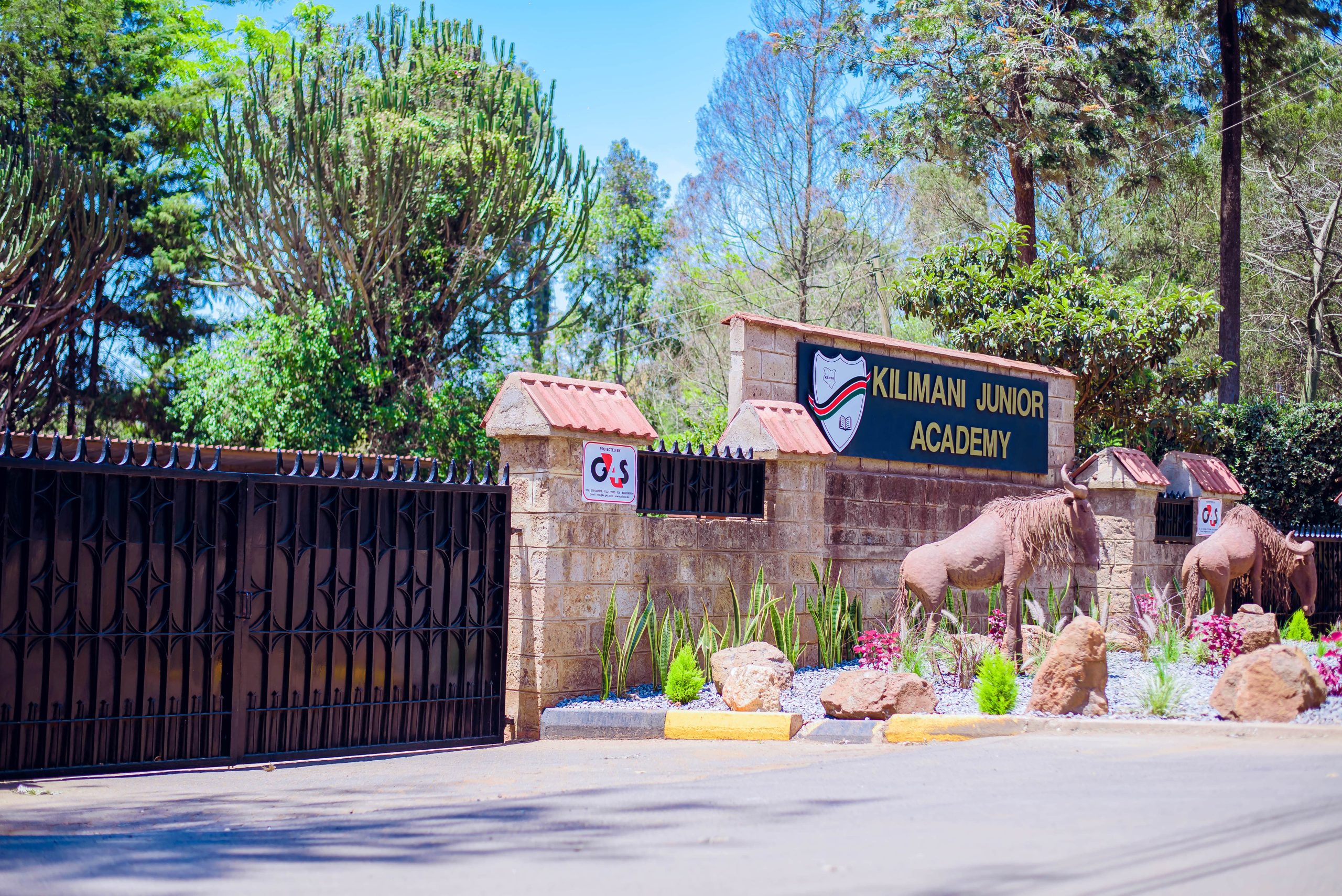
Kilimani Junior Academy is a neighbourhood school serving ECDE and primary students in Kilimani. KJA has been part of the local educational landscape for long enough to have taught the children of parents who themselves grew up in the neighbourhood, which gives it a community character that newer schools have not yet developed.
The school operates on CBC and is regarded as a solid, reliable option for families who want a quality primary education within easy walking or driving distance without paying the higher fee levels associated with the larger branded schools in the area.
Curriculum and Age Range
CBC from ECDE through upper primary. English medium instruction with Swahili as a core curriculum subject and Kiswahili activities integrated into daily life at the school. The school follows the standard KICD frameworks for all CBC subjects.
Who Chooses KJA
KJA is popular with Kenyan middle-class families resident in Kilimani who want a quality neighbourhood school without the premium pricing of the internationally-oriented institutions. It is also chosen by families who value the school’s established community relationships and the continuity of teaching staff, which has been more stable at KJA than at some of the higher-turnover schools in the area.
The school’s proximity to several of Kilimani’s residential streets means that some children can walk to school, which is a genuine quality-of-life benefit in a neighbourhood where the morning traffic can make short car journeys surprisingly time-consuming.
St. Hannah’s Preparatory School
Overview
St. Hannah’s Preparatory School is a private preparatory school in Kilimani offering CBC from ECDE through primary. The school emphasises academic preparation alongside character development, and its name reflects a Christian heritage that informs the school’s ethos without being exclusively faith-based in its admissions or curriculum delivery.
St. Hannah’s occupies the preparatory school segment of the Kilimani market, aiming to give younger children a strong academic and behavioural foundation that prepares them for competitive secondary school entry, whether at local private schools or national schools.
Curriculum and Age Range
CBC from ECDE through primary. The school places particular emphasis on literacy, numeracy, and the development of study habits in the early years, which reflects its preparatory positioning. Co-curricular activities include arts, music, and introductory sports programmes.
Who Chooses St. Hannah’s
St. Hannah’s attracts families who are planning ahead for secondary school entry and want their children to be genuinely well-prepared academically from the primary years. Parents who choose it tend to be engaged in their children’s education and expect regular, substantive communication from the school about their child’s progress. The school’s parent community is involved and active, which creates a social network that benefits both parents and children.
Appleton Schools
Overview
Appleton Schools is a private institution in Kilimani that blends the CBC national curriculum with Cambridge-influenced teaching methods and an internationally-oriented school culture. The school serves students from nursery through secondary, making it one of the few Kilimani schools that provides a complete educational journey without requiring a secondary school transition.
Appleton has invested in its facilities and teaching quality over recent years and is increasingly regarded as a serious mid-market option for families who want Cambridge-style academic rigour within a Kilimani location and at fee levels below those of the fully international schools.
Curriculum and Age Range
The school follows CBC in the primary years and transitions to Cambridge-aligned preparation at secondary level, working toward IGCSE and A-Level examinations. This dual-track approach is similar to Makini’s model and offers families flexibility in planning for both local and international university pathways.
Who Chooses Appleton
Appleton appeals to Kenyan professional families who have international educational aspirations for their children but prefer to keep them within a Kilimani neighbourhood school environment rather than committing to the higher fee levels and longer commutes associated with schools in Karen or Gigiri. The nursery-to-secondary continuity is a significant practical convenience for families who want to avoid the disruption of a secondary school transition.
Practical Considerations
As Appleton has grown, its co-curricular provision and secondary examination support have strengthened. Families considering Appleton for secondary-aged children should ask specifically about examination outcomes, university placement support, and the depth of teacher expertise in the specific subjects relevant to their child’s interests and strengths.
Light Academy, Kilimani
Overview
Light Academy is a Muslim faith-based school with a Kilimani campus offering both primary and secondary education. The school follows the CBC curriculum at primary level and the KCSE pathway at secondary level, and integrates Islamic religious education and values across both divisions. Light Academy is part of a wider network of Light Academy institutions in Nairobi and has built a strong reputation within the Muslim community for combining credible academic outcomes with a consistent Islamic school environment.
Curriculum and Age Range
CBC at primary level with Islamic Religious Education as a core subject. KCSE pathway at secondary, with Islamic Studies continuing through secondary as part of the examination subject selection. The school operates a halal canteen and observes Islamic prayer times within the school day structure, which is a significant practical consideration for Muslim families evaluating their options.
Who Chooses Light Academy
Light Academy is the natural choice for Muslim families in Kilimani who want their children educated within a school environment that is actively aligned with their faith and values. The school’s KCSE examination outcomes have been consistent, and a number of Light Academy alumni have progressed to competitive university programmes both in Kenya and abroad.
Non-Muslim families occasionally consider Light Academy for its academic reputation but are less common given the explicit faith orientation of the school’s daily life. The school is transparent about its Islamic character and admissions teams will advise directly on whether the environment is a suitable fit for any individual family’s situation.
Practical Considerations
Light Academy’s primary-to-secondary continuity within the Kilimani campus removes one of the transition challenges that primary-only schools create. For Muslim families who have been considering schools outside Kilimani to find a faith-aligned option, the presence of Light Academy within the neighbourhood is a genuine advantage worth factoring into residential decisions.
Kilimani Primary School (Public)
Overview
Kilimani Primary School is the neighbourhood’s government-funded public school and one of the better-regarded public primary schools in Nairobi’s upper-middle-class residential belt. The school follows the CBC curriculum from Standard 1 through Standard 9 and is managed under the Kenya Ministry of Education framework.
Public schools in Kenya are funded through the government’s Free Day Secondary Education and primary capitation grant programmes, which means fees are substantially lower than at any private school. For families who need to manage education costs carefully, or who philosophically prefer public education, Kilimani Primary offers a level of academic quality that is above the average for public schools nationally, partly because the neighbourhood’s socioeconomic profile attracts relatively motivated parent communities and produces students who arrive at school with stronger early literacy and numeracy foundations than the national average.
Curriculum and Age Range
CBC from Standard 1 through Standard 9. The school follows all KICD curriculum frameworks. Class sizes are larger than at private schools, typically running between thirty and forty-five students per class depending on the year group. Despite these class sizes, the school has produced consistent KCPE results in years past and is adapting to the CBC transition as the new curriculum embeds at primary level.
Who Chooses Kilimani Primary
Families who choose Kilimani Primary tend to fall into one of several categories. Some are philosophically committed to public education and are attracted by the diversity of the school community. Some are managing household budgets where private school fees are not feasible alongside Kilimani’s rental costs. Some are families who have assessed the school carefully and concluded that its quality is adequate for their children’s needs without the premium of private provision.
It is worth noting that Kilimani Primary’s public school status does not mean it is without cost. Uniforms, activity fees, and various school levies add to the nominal capitation grant structure, though the total annual cost remains a fraction of any private school in the neighbourhood.
Practical Considerations
Admission to Kilimani Primary is by catchment area, which means families must be resident in the school’s designated catchment zone to qualify for enrolment. The school office can confirm catchment boundaries, and this is worth checking before committing to a specific address within Kilimani if public school enrolment is part of your plan. The school operates on the standard government calendar, which differs in holiday timing from some of the Cambridge-aligned private schools in the neighbourhood.
Curriculum Comparison: CBC, Cambridge, and French Bac
For families relocating to Kilimani from outside Kenya, the curriculum landscape can be unfamiliar. Here is a plain-language comparison of the three main systems represented in Kilimani’s schools.
Competency Based Curriculum (CBC): Kenya’s national curriculum, introduced progressively from 2017 and now the primary system for all public schools and most private schools that are not fully international. CBC emphasises practical skills, creativity, and values alongside academic subjects. It leads to KCSE at secondary level and is the pathway for Kenyan national universities. Children who will build their lives and careers primarily in Kenya are best served by a CBC grounding.
Cambridge International Curriculum: Delivered by schools accredited with Cambridge Assessment International Education, this British-derived curriculum leads to IGCSE examinations at around age sixteen and Cambridge A-Levels or equivalent at age eighteen. It is widely recognised by universities in the UK, United States, Australia, and across the world. It is the right choice for families with a clear intention to pursue international university admissions or who expect to relocate and need curriculum continuity across school systems.
French Baccalauréat: The French national qualification, delivered at Lycée Français Denis Diderot. It is the broadest of the three in its subject requirements, demanding competence across sciences, humanities, and languages simultaneously. It is particularly valued for French university admissions and is recognised internationally. It is the natural choice for families embedded in the French educational tradition and for those who want a genuinely multilingual education with French as the primary instruction language.
Choosing the Right School in Kilimani
The right school for your child in Kilimani depends on four things: the curriculum pathway that suits your family’s longer-term plans, the age range you need covered and whether a nursery-to-secondary option matters to you, the fee level that is sustainable within your household budget, and the school culture and values environment that aligns with your family’s priorities.
Most families narrow their shortlist to two or three schools using these criteria and then make the final decision based on school visits. In Kilimani, the density of school options within a compact area means you can physically visit four or five schools in a single morning, which is a genuine advantage over neighbourhoods where your options require driving across the city.
Book visits as early as possible for the academic year you are targeting. Kilimani’s schools, particularly at the nursery and reception entry points, manage waiting lists and the most popular options fill well before the start of term.
For further research on choosing a neighbourhood based on school availability, read the guide to the Best Areas in Nairobi Near International Schools and compare Kilimani’s provision against the school clusters in Lavington and Karen, which offer a different range of options including some of Nairobi’s most prominent international campuses.
Return to the Kilimani Neighbourhood Guide for the full article cluster or go back to the Nairobi Neighbourhood Guide to compare the full residential and educational landscape across the city.



Join The Discussion